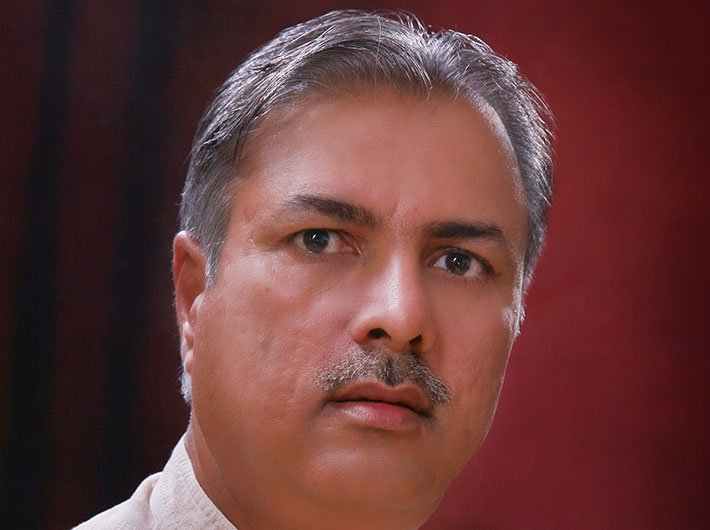
Demanding reservation under OBC category, the community has plans for a wider protest, this time peaceful, says Jat leader
After the violent Jat agitation held earlier this year, the Haryana government agreed to give 10% reservation to the community in special backward class category. However, the Jats aren’t satisfied with this development at all. The Akhil Bhartiya Jat Aarakshan Sangharsh Samiti (ABJASS) has recently threatened the government to fulfil their demands of reservation under OBC category or witness a series of protests in the capital from June 5.
In an interview with Governance Now, ABJASS president Yashpal Malik talks about government’s ‘partial nature against the Jats’, the unending quota debate and the community’s plans to mobilise protest across the country. Excerpts from the interview:
Although the Haryana government has passed the bill for Jat reservation in government jobs and educational institutions, why do you want to start the agitation again? Are your demands not met?
The Haryana government has twisted the bill and presented it in a manner which doesn’t give us much benefit. Earlier, we had 15% reservation in class 1 and 2 category and 30% in class 3 and 4 category. After we protested earlier this year, they raised the reservation in class 1 and 2 category to 23% and in class 3 and 4 category to 37%. But we want at least 30% reservation in class 1 and 2. Also, the backward quota is not enough. That is why we feel it is time for us to raise voice again and we will not lose hope till the time our demands are not met.
Do you fear the supreme court will strike down the bill which suggests 10% reservation in special backward classes?
The supreme court has always been biased. It has always been against us. Their decisions are not based on law but personal grudges. KC Gupta’s 2012 survey clearly states that Jats in Haryana are backward but the government ignored the survey then and deliberately didn’t give us reservation under the OBC category. In fact, the Mandal Commission report and Gurnam Singh Aayog report also declared Yadav’s, Gujjars and Saini’s as backwards but the government is turning a blind eye to all the surveys.
It is a general perception that Jats have a lot of land. What is the need for reservation then?
They can say anything they want. But the reality remains the same. Agriculture is our main source of income and everybody knows the state of farmers in our country. In Haryana, there are 18,000 villages out of which Jats reside in around 5,000 villages. The remaining 13 villages belong to OBC category people who occupy a lot of land. They are the ones with the land, not us. It’s a wrong notion that Jats have a lot of land.
In your last protest, Haryana witnessed huge violence. Irreparable damage was done to human lives and public property. Are you going to take the same path again?
Jats were never in favour of violence. Last time it was created by the Haryana government. They led the OBC brigade to create havoc in the society by burning houses and killing people. We were not the ones to take the path of violence. Many Jat dharamshalas and statues of our leaders were burnt. Our property was damaged. Has anybody in the media written about that? Like last time, this time also we plan to start fighting for the cause in a phased manner. First phase will require all the Jats to sit on dharnas so that our voices are heard. It will continue till the government agrees to hear us. If the government fails to do so, we have then planned to block the roads. But no violence will be created from our side.
Jat protests have already gained momentum in Haryana, Uttar Pradesh and Rajasthan. Where else do you plan to spread your voices?
We have been fighting for reservation for a very long time and our fight is on in 13 states instead of just these three. This includes Jammu and Kashmir, Punjab, Haryana, Himachal Pradesh, Rajasthan, Madhya Pradesh, Gujarat, Andhra Pradesh, Bihar and Maharashtra. The protests will gain momentum in all the states.
You recently met Rajnath Singh. How did he react to your extended demands?
He said that he will ask for the report from Haryana government and discuss the matter with them. He’s a political leader, what else is he going to say.