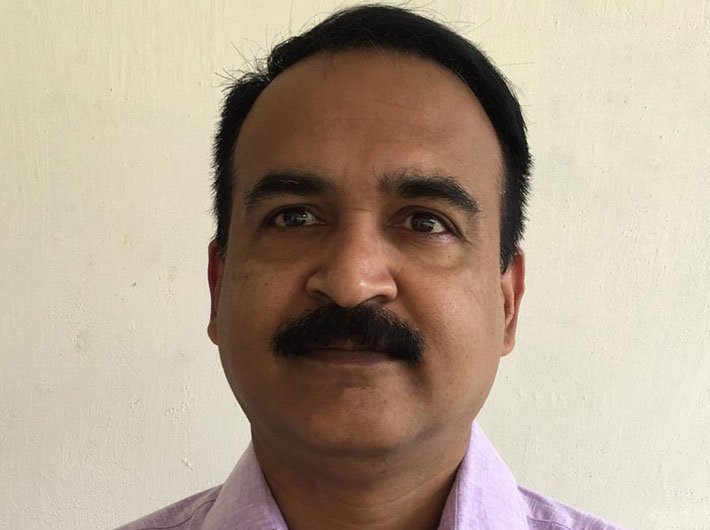
Rajkishor Mishra, former advisor of supreme court on right to food, talks about food governance in Odisha.
With high economic growth and many welfare schemes in place the state, has the situation on food and nutrition of people of Odisha improved over the decades? Rajkishor Mishra, former advisor of supreme court on right to food brings out key discussion of food governance in Odisha.
Recently CM Naveen Patnaik announced to launch Odisha’s own food security scheme, which will cover more than 34.44 lakh families that have been left out of the National Food Security Scheme (NFSA). Will it be able to bridge the gap in food security or is it a parallel scheme, like Odisha’s Biju Swasthya Kalyan Yojana is parallel to the centre’s Ayushman Bharat Yojana, launched due to political rivalry with the BJP?
I on behalf lakhs of left out poor shall congratulate the state government for taking this decision, though incomplete and late. More than 40 lakh eligible poor who have been waiting for years after application to get benefit under PDS – NFSA, got the assurance that sooner or later they would be getting their entitlement under state food security scheme (25 lakh persons to be included in the first phase).
Right to food and nutrition security has become a political issue. It has become possible due to the intervention of the supreme court and the consistent pursuit by the National Right to Food Campaign. This was well reflected in the last panchayat election in Odisha where the real voter – poor in western and south Odisha -- rejected the ruling party. This was due to the mis-governance in food, nutrition and social security.
Development priorities of both the ruling party (at centre and state) have been different; one focuses on infrastructure, connectivity, gas connection and hygiene, whereas the party ruling the state has been focusing on food, nutrition and social security. But at this time both lack consistency and convergence. In both the cases improper implementation along with lack of transparency, accountability and robust grievance redressal is lacking, which has pushed the poor to further vulnerability.
There are families in Odisha which are excluded from the NFSA. Do other states face a similar situation? Does this point at the failure of NFSA?
Governments have to understand that basic entitlements like food, health, education and water cannot be targeted. As long as we lack this understanding, for one reason or other, exclusion would persist. Stringent targeting and improper selection and identification of beneficiaries have been major causes of exclusion and inclusion error in social security schemes across India. Recently technology based harassment and exclusion has been reported from neighboring states like Jharkhand, where due to Aadhaar some people allegedly died of starvation.
We need a paradigm shift in our governance model. Governments have to understand that food and nutrition governance is not about saving revenue, but it is all about making the system efficient so that the needy and poor are not deprived of their entitlements. If the system created for nutrition governance is itself excluding the most deserving then we have to question the system. Extreme poor not getting five kilo of cereals for [lack of] Aadhaar, bank linkages, biometrics or PoS machine is not acceptable. Preliminary reports from the field in Odisha also indicate exclusion pension and ration due to Aadhaar.
It is not failure of the NFSA, but failure of governance.
Is the coverage of the poor families complete with the new state food scheme or there will be still some left out families?
The well intended state food scheme would still keep the poorest outside the food security net. From the recent field visits and interaction with officials, I could say, the implementing officials have not come out from their exclusion mindset and more importantly the process that is followed to include (making Aadhaar mandatory and population based target for districts) is going to create both exclusion and inclusion error across the state at the same time.
State is yet to specify its stand on intra-household exclusion and including the most vulnerable into the AAY. With confusion over these issues, it is feared that most marginalised and poor would be deprived of the food scheme.
After the hunger deaths of Jhintu Bariha and family members in Balangir district in 2009 the pressure was built up and the government launched several food related schemes, which staved off starvation deaths in KBK (Bolangir-Kalahandi- Koraput) region. But they have again resurfaced in last two years. What is the reason?
Both the state and society are responsible for the hunger-related deaths. Now we are at a stage of societal transition where timely identifying a vulnerable, who has slipped into hunger, is a major challenge. Need of the hour is for the government to initiate a dialogue to timely identify and come to the rescue of such vulnerable people and household. Sensitising the administration, political leadership especially PRI and society and their coordination and convergence would stop the cases of starvation and hunger in Odisha.
On the other hand, the government has to admit that exclusion of most vulnerable is a governance issue and need fixing of accountability, and more importantly downward accountability.
Odisha has witnessed poverty, hunger deaths, and child sale. Does the new Odisha you live in still carry the same image as it was thirty/forty years before when there was forced child sale in Kalahandi in mid-80s?
During the last decade we have seen dramatic improvement in governance especially in food, nutrition and social security schemes. Keeping the pulses scam behind we smoothly moved towards decentralised procurement in ICDS and MDM. Despite meagre amount as pension the coverage and distribution of pension has been exemplary in Odisha. The PDS reform and streamlining MDM in last decade is remarkable. As indicated earlier with improper implementation and lack of consistency we are at a stage best described as four steps forward and two steps backward.
With stable bureaucracy, specific role of PRI in food and nutrition governance and with robust accountability and grievance redressal mechanism we can further change the image.
The sustainable development goal number two aims to end hunger, achieve food security and improve nutrition by 2030. Do you think the state has adequate policies and schemes in place to achieve this?
The recent policy decisions of expanding and near universalising pension scheme, providing 5 and 12 eggs to children and women in Anganwadi, including the left out through State food security scheme, revamping maternity entitlement – Mamata scheme and many more -- indicates that the state has the intention to achieve the SDG-2. But when we see the inconsistency, improper implementation, absence of accountability, no specific policy for ensuring participation and lack of role of PRI, bureaucratic instability creates doubt over the intention.
The state government has to understand that well intended policy decision without clear rollout policy is a failure. Clear rollout policy is as important as well intended policy decision.