Agriculture is a politically sensitive sector, and wheat, being a staple in many regions, is more so. India still does not have policies that would allow the country to use wheat efficiently. First, it does not have enough places to store it and, second, there is no guarantee that wheat production would be robust in the coming years due to its dependence on monsoon.
This year, for instance, the government is struggling to get suitable buyers for wheat for open market sale scheme (OMSS), and experts are not optimistic about the government reaching the OMSS target of 6 million tonnes by this year.
According to Rajiv Yadav, vice-president (grains & oilseeds) at Noble Natural Resources, the total OMSS because ample wheat is available in the market (or mandis). He says part of the problem is that India is still not looking at exporting wheat and wheat products.
Experts say Indian wheat prices are higher and uncompetitive. Looking at the trend in belts such as Kanpur, Bareilly, Indore, Itarsi, Kota, the free on board (derived prices) of mandis for wheat has mostly ranged between 280 and 290.
Another problem is that the quality of Indian wheat is not considered good globally. Traditional markets for wheat across the world, whether it is southeast Asia or West Asia, would prefer Black Sea wheat than Indian wheat, says Yadav, an exporter himself.
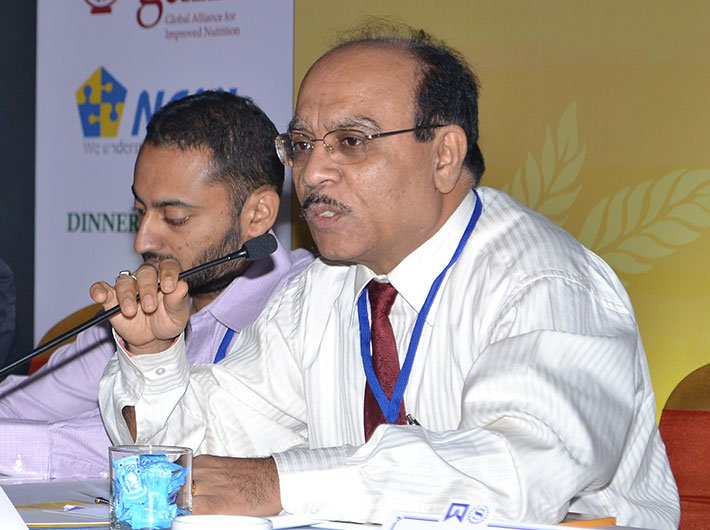
Another problem is the dismal condition of warehouses run by the government. BB Pattanaik, managing director, Central Warehousing Corporation, discusses the warehousing major’s role in all this in an interview with Governance Now.
Central Warehousing Corporation (CWC) has been criticised for its lack of technologically equipped warehousing facility. How do you respond?
Yes, I myself criticise the lack of technology at CWC. But we have a plan to implement enterprise research planning (ERP), which would be computerised to network our warehouses, regional offices to warehouses, regional offices to headquarters, etc. We call it the integrated warehouse management solutions. We have engaged National Institute of Smart Governance (NISG) as our consultant. We have kept a target and the request for proposal (RFP) has been invited.
Parties which participated in RFP are getting shortlisted, (and) we plan to issue work orders as per the memorandum of understanding (MoU) target signed with the ministry by December this year. So computerisation and use of technology have been taken seriously by us and we have now chalked out a roadmap for it.
Would any new technology be introduced to mitigate inventory damage and enable safe movement?
Technology storage and inventory management would also become more efficient (with increasing tech support). Cost of operation would also come down drastically and those who want to reduce their warehousing and management costs would be in a position to compete with our private competitors.
What measures are being taken to control post-harvest losses?
In India, post-harvest losses have come down substantially not only at the farm-level but at organised storage-level. We have a scheme called farmers’ extension service scheme at CWC. Through this, we train farmers on storing grains at the farm-level – how they can store surplus grain for months. Earlier grains were kept mostly in an open storage (but) more storage infrastructure is being created now. The private sector is getting 10-year guarantee under the food corporation of India’s (FCI) private entrepreneur guarantee scheme. The government has formulated the scheme for construction of storage godowns through private entrepreneurs.
Overall, in the post-harvest period – right from threshing, transportation, storage to consumption – the loss is between 2 and 3 percent. But at organised storage like that in CWC, FCI or state warehouse corporation, the storage loss is less than 0.5 percent. So we have improved.
Is there any new and improved policy for storage and procurement?
CWC doesn’t get into procurement; its work is storage. In case of oilseed and pulses, the union agriculture ministry has identified CWC as one of the agencies to undertake procurement in case there is a price support operation required. For the last two or three years, prices of oilseed and pulses have always been above the market price or minimum support price, so there has been no compulsion for CWC to go for oilseed and pulses procurement. The FCI and other agencies are responsible for procurement of foodgrain; we are not into procurement operations. We undertake storage on behalf of FCI.
Broadly, CWC has storage capacity for about 104 lakh tonnes in its 470 warehouses. Our client base is quite wide and we also store foodgrains of other agencies, such as the state civil supply corporation (and for) private trade. Even farmers, traders and other depositors come and store (with CWC).
Our commodity base is also wide – CWC deals with more than 400 commodities, which includes oilseeds, foodgrains, jute, cotton, metal, cement, sugar and others. One of our recent diversification is into areas of operating cargo terminals at integrated check post (ICP).
ICP has passenger terminal and cargo terminal and CWC operates through the cargo terminal. At Wagah-Attari (border) near Amritsar, land board authority has developed ICP over 120 acres and CWC is operating through cargo terminal there. Similar activity has been undertaken in Agartala on India-Bangladesh (route).
The third one that is likely to be ready by the end of this year is a facility at Petrapole (West Bengal) on the India-Bangladesh border.
How do you compare China and USA’s grain storage system with that of India?
I have visited China, USA, Australia and many other countries. In Australia and the US, grain is not handled in bagged form as we do here in India. Loose grain is handled there in bulk. They also have a concept of silos. We have started building integrated silos. FCI has plans to create another 20 lakh tonnes (of) silos through private investment. But bulk silos can be ideally utilised if bulk storage in silos is added to bulk transportation mechanism like bulk wagons etc.
The government is taking initiative in this direction. At least for wheat we will start our handling and storage mechanism from bagged to bulk form.
What are the challenges CWC faces?
Our biggest challenge is technology. We have not modernised our way of storage such as introducing IT, robotics to trace things, etc. It is mostly manual at present. We will overcome this challenge with the proposed integrated warehouse management solutions.