‘Mission Hazaar’ aims at taking the gender ratio to 1,000 girls for every 1,000 boys. At present, there are only 914 girls for every 1,000 boys in India, but it is much lower in states like Haryana. As part of the campaign, a survey was conducted among young people from schools and colleges in four districts of Haryana by an international human rights organisation, Breakthrough, which works towards removing the practice of gender-biased sex selection (GBSS), prevalent in many parts of the country. It is engaging common people on the skewed sex ratio issue to end gender-based discrimination.
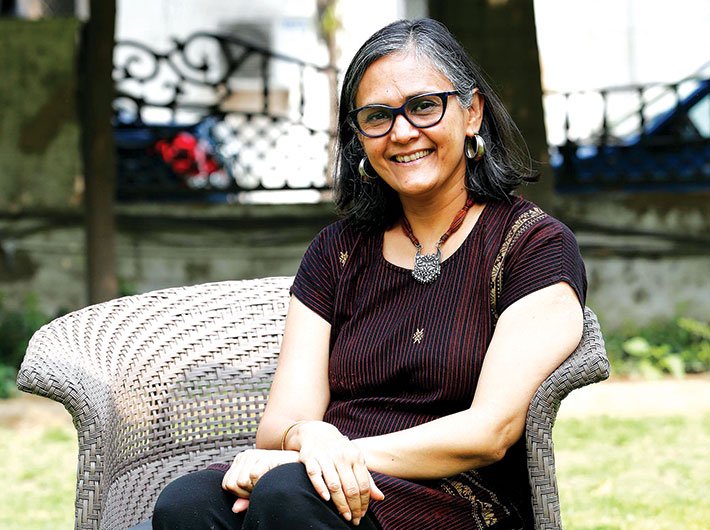
In an interview with Jasleen Kaur, Sonali Khan, vice-president and country director, Breakthrough, talks about the mission and changes it has brought about, as also its roadmap. Excerpts:
What is Mission Hazaar all about?
When we started working we were largely focusing on domestic violence. Over the years we identified other areas, and one of these was the issue of the skewed sex ratio, which is a very critical problem. And one of the states which is really affected by this is Haryana.
Through one of the baseline researches we tried to find out the reasons for this problem. It is deeply related to the patriarchal mindset that undermines a girl’s status in the community, doesn’t give girls due regard and instead has a high preference for the male child.
As part of Mission Hazaar we have floated questions to 10,000 children of senior school and youth in colleges. We asked them if they really found the girls missing. They were asked what they see in their families, in schools and colleges, in public spaces. The data that has emerged is thought provoking and disturbing as well. Most girls and boys say there are more boys in their families and in every generation.
It shows how they are seeing women’s position ... gender bias that is there. It is a very powerful data because this data is of the young people themselves experiencing gender-biased sex selection.
Do they really see this as gender bias and a social problem?
It is not that they are not aware of the problem of missing girls. But they really do not connect it with gender inequity and low position of women in society. Through our campaign we are making efforts to draw people’s attention to the fact that this issue of sex selection is deeply connected with gender bias. If the community does not respect and value women then one of the outcomes is in the form of the skewed sex ratio. Young people are noticing missing girls. But they do not relate it to discrimination. They don’t link these things to gender bias. We have to make them understand that this is not normal.
We are working on a school-based intervention and through 150 government schools we are reaching to 18,000 children, in partnership with the state department of education. Through gender sensitisation at a very early age we are trying to give them an alternative perspective.
You have focussed on four districts in Haryana which are largely urban.
We need to understand that the problem of gender bias is not only a rural problem. In fact, research shows that some of the worst hit areas are the ones with most prosperous families. Sonipat and Panipat are more industrial and the ratio is fairly skewed there as well. But Jhajjar is one of the worst hit.
What kind of campaigning is done and what are the visible changes?
It is very early to talk about the big changes in terms of statistics. But there has been a positive response. Through training and capacity building we are working with frontline health workers and also with ASHAs (accredited social health activists) and aanganwadi workers. We are engaging them to spread the word.
The first big change is the acknowledgement of inequity, and there has been a big shift, a lot of young people are now talking about it. The acknowledgement and acceptance of the problem is the immediate change that we are seeing.
There has been a tradition in Haryana of naming their daughters as Antim, Bhateri, etc. which are demeaning. Now we hear stories of celebration of birth of daughters. Ultimately, it is the people who have to change. Our whole approach has been to involve the community so that it becomes their mission.
The government of India has also launched the ‘beti bachao, beti padhao’ campaign. We are leveraging that opportunity to spread the message. It is important to sustain this effort so that change really happens. And we know it is not going to happen overnight.
Our whole campaign is to look at the value of women and if they are missing how it is impacting the life of society. Also, it is not just more number of girls being born but also how they are treated in the sense of access to nutrition, education and healthcare.
[email protected]
(The interview appeared in March 1-15, 2015, issue)