
What it means to be an administrator at Lakshadweep

IPS officer Esha Pandey speaks of the governance challenges during her stint at Lakshadweep islands

pujab

Puja Bhattacharjee | May 20, 2016 | New Delhi

#Lakshadweep   #IPS   #Esha Pandey  


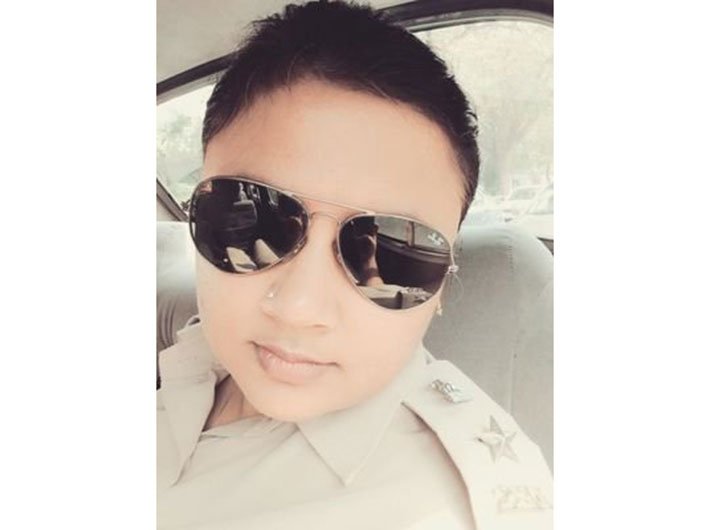
Have you ever thought of the Lakshadweep islands beyond a paradise in the midst of the sea? What are the governance challenges in this remote archipelago? To know the answer to these questions, Governance Now sat down with Esha Pandey, additional DCP II, central district, Delhi police.

Pandey was posted in Lakshadweep for three years in various capacities of additional superintendent of police, commandant of India Reserve Batallion, superintendent of police and secretary, women and child development, tribal welfare and art and culture.

 Born in a Brahmin family in Lucknow, Pandey joined Indian police service (IPS) after a brief stint as a journalist. After completing her training, she was assigned to Arunachal Pradesh-Goa-Mizoram and Union Territory (AGMUT) IPS cadre. A native of Lucknow, Pandey had spent all her life living in landlocked areas.

“It was scary in the beginning living in an island 7 km long and 2 km wide, cut off from the mainland,” she says. The only mode of transportation were all weather ships. The only Air India flight connects Agatti with Kochi on 6 days of the week, other than Sunday.

“The island is completely dependent on ships for supplies. If ships do not dock at the harbour for a day, then supplies like vegetables and medicines are cut off for that day,” she says. Milk is rationed on the islands. As a mother of a toddler, that too was an inconvenience. Only one government hospital caters to the people of the island.

Professional resources were limited too. Ten of the islands are inhabited and they are not connected to each other Moreover, all the islands come under one district. “There is no facility for landing helicopters at night. As a result travel is inhibited after dusk,” she says. Helicopters stop plying after 4 pm and resume service in the morning. “During 2014 general elections, I was the additional superintendent of police and moving troops was a big challenge,” she says.

Troops are usually dispatched from the capital of Kavaratti. Pandey says that the population of Lakshadweep is highly educated and do not engage in mindless violence. “But they do stage sit-ins and political protests.” For example, when elections were being held in Kalpeni, an island 123 km away and there was apprehension of unrest, troops were dispatched from the nearest island. Luckily for the administration, agitations are mostly peaceful, will take proper permission and will not spring a surprise on you.

Electricity generation is totally dependent on diesel. Pandey feels that more efforts must be made to tap wind and solar energy. Communication is also a huge challenge. Airtel is the only mobile service provider, other than BSNL and broadband connection is available of BSNL only. “It takes 10 tries to connect a call,” says Pandey. Thanks to DM Net and satellite phones, communication within the administration is not totally cut off. “Intra-island communication is not a problem but inter-island communication is.”  Pandey feels that industry needs to be brought in the islands as people are completely dependent on government jobs.

Now posted in Delhi, Pandey is experiencing a sea change. “Accountability and expectations are high in Delhi. Every move is watched by the media. The work hours are also exhaustive,” she says.

Comments


Other News

PM`s first decisions from Seva Teerth reflect spirit of Seva

In his very first set of decisions after shifting to Seva Teerth, the new address of the PMO, PM Narendra Modi signed important files relating to decisions that reflect the spirit of Seva. These decisions touch every section of society: farmers, women, youth, and vulnerable citizens. 1.

AI@Work: Driving productivity, jobs, and innovation

Key Takeaways     India ranks 3rd in Stanford University`s 2025 Global AI Vibrancy Ranking.     Data infrastructure, entrepreneurship and demography are key enablers for AI adoption.     In India the relative penetration of AI skills was 2.5 ti

Urban Blind Spot: Animals, governance, and the cost of ignoring coexistence

India’s cities are expanding at an unprecedented pace, absorbing people, infrastructure, and economic activity at scale. What urban governance frameworks have been slower to absorb is a reality already playing out on the ground: animals are an inseparable part of urban life. From community dogs and p

How India uses AI in the field of culture and languages

* India is institutionalising AI for culture and languages through national platforms such as BHASHINI, Anuvadini, Gyan Bharatam and Adi Vaani etc. * AI is being used to make cultural and knowledge assets usable by digitisation of manuscripts, translation of academic content, and in

India improves position on Network Readiness Index

India has improved its position by four slots and is now placed at 45th rank in the Network Readiness Index 2025 (NRI 2025) report prepared by Portulans Institute, Washington DC.   The report, released on February 4, maps the network-based readiness landscape of 127 economies based on th

Framework for India-US Interim Agreement announced

India and the United States on Saturday announced they had agreed on an interim framework for an interim trade agreement, indicating a broad roadmap of the opening of the markets and reduction in trade tariffs on both sides. In a message on X, prime minister Narendra Modi said, “Great


Archives

Current Issue

Opinion

Facebook Twitter Google Plus Linkedin Subscribe Newsletter

Twitter






