
Eight Indian states have more poor than 26 African countries

Half of the world’s poor live in the South Asia

GN Bureau | July 17, 2010
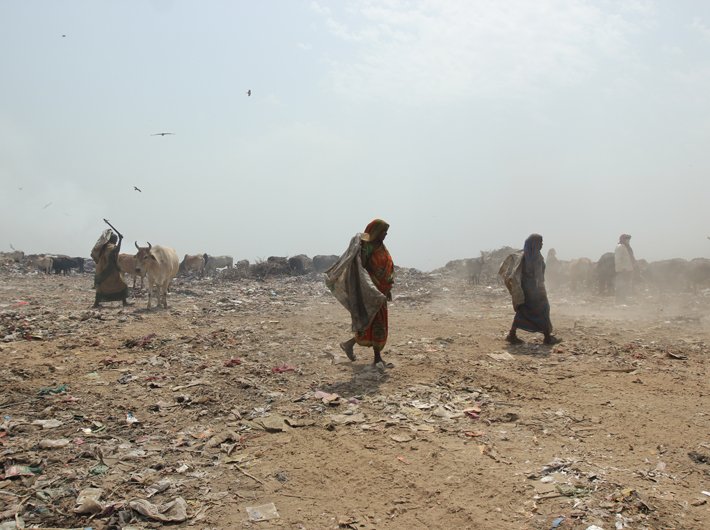


There are more poor in eight Indian states tahn there are in 26 African countries, according to a report brought out by the United Nations Development Programme (UNDP) and Oxford university.

The study says that there are more poor people as per Multidimensional Poverty Index (MPI) in eight Indian states - a total of around 421 million in the states of Bihar, Chhattisgarh, Jharkhand, Madhya Pradesh, Orissa, Rajasthan, Uttar Pradesh, and West Bengal than in the 26 poorest African countries combined (410 million).

The study mentioned that the population of the poorest state Bihar with 95 million people exceeds the total of nine of the ten poorest African countries.

The study reported that the Scheduled Tribes (ST) have the highest MPI (0.482), almost the same as Mozambique and the Scheduled Castes (SC) have a headcount of 66 percent and their MPI is a bit better than Nigeria. “58 percent of other Backward Castes are MPI poor,” the report added.  

However the report mentioned that the states like Delhi, Kerala, Goa, Punjab and Himachal Pradesh have least number of poor people in India. Other ‘top ten’ states with the least number of poor in India are Tamil Nadu, Uttarakhand, Maharashtra, Haryana and Gujarat.

The study analysed that South Asia and Africa are two places where poverty are widespread as half of the world’s poor live in South Asia (51 percent or 844 million people) and one quarter in Africa (28 percent or 458 million).

The MPI has taken into account a range of factors or “deprivations” at the household level: from education to health outcomes to assets and services to calculate the number of poor people around the world. The multidimensional approach to assessing poverty has been adapted in Mexico. Now Chile and Colombia are also trying to use the same figure to calculate the number of poor people.

The new index will come in the forthcoming edition of the UNDP Human Development Report in October this year and will the Human Poverty Index, which had been included in these reports since 1997.

Read the report

Comments


Other News

Supreme Court gets five new judges

Five new judges were appointed to the Supreme Court of India on Monday. "Vide Notifications of even number dated 01.06.2026, in exercise of the powers conferred by clause (2) of Article 124 of the Constitution of India, the Hon’ble President of India is pleased to appoint (i) Shri

Astonishing breadth and depth of ancient Indian knowledge systems

The Greatest Books of Ancient India: Incredible Ideas about Science, Music, Maths, Art and More By Dr. Pradeep Chakravarthy and Dr. R. Thiagarajan Hachette India, 208 pages, Rs 399  

Strong El Nino threat over India`s monsoon, food & water security

India is heading into the southwest monsoon season this year under the shadow of a rapidly strengthening El Nino, with meteorologists warning that the climate phenomenon could significantly disrupt rainfall patterns, intensify heat stress and place additional pressure on the country’s agriculture-d

How corporates can nudge real change

The Business Of Business Is (Not) Just Business: How Behavioural Tools Can Drive Real Change Edited by Sutapa Banerjee, with Foreword by Nadir Godrej HarperCollins, 336 pages, Rs 699  

India stopped jailing people for paperwork. Now comes the hard part

A small pharmacist in Rajkot neglects to change a notice in his store under a little-known clause of a public health law. This was not only a non-compliance matter, but also a criminal offence, and a jail sentence was the punishment under the old system. Not a fine. Not a warning. Jail. Now scale

How to make our cities climate-resilient

Indian cities are growing at a pace that our infrastructure and climate can no longer sustain. This rapid urban sprawl increasingly strains urban systems, overshadowing the severe environmental fallout produced in its wake. The repercussions include Urban Heat Island Effect (UHI), Urban Floods, and many mo


Archives

Current Issue

Opinion

Facebook Twitter Google Plus Linkedin Subscribe Newsletter

Twitter






