
Global emission grew faster between 2000 and 2010, says report

The report says that only major institutional and technological interventions would give a chance to limit the increase in global mean temperature

GN Bureau | April 14, 2014
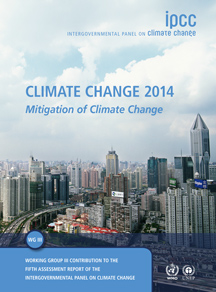


Notwithstanding policies abound world over on tackling climate change, global emission of greenhouse gases grew much faster between 2000 and 2010 than in each of the three previous decades, according to a new report by the Intergovernmental Panel on Climate Change (IPCC).

The report, entitled ‘Climate Change 2014: Mitigation of Climate Change’ says that only major institutional and technological interventions would give a chance to limit the increase in global mean temperature to two degrees celsius (2°C) above pre-industrial levels.

It is the third of three working group reports of IPCC, which, along with a synthesis report due in October 2014, constitute the IPCC’s fifth assessment report on climate change.

“Climate policies in line with the two degrees celsius goal need to aim for substantial emission reductions,” Ottmar Edenhofer, one of the three co-chairs of the working group. “There is a clear message from science: To avoid dangerous interference with the climate system, we need to move away from business as usual.”

The report further underlines that considering the present situation, to limit the increase in global mean temperature to 2°C, it will need lowering global greenhouse gas emissions by 40 to 70 percent compared with 2010 by mid-century and to near zero by the end of this century.

"Ambitious mitigation may even require removing carbon dioxide from the atmosphere,” the report pinpoints.

Estimates of the economic costs of mitigation vary widely. In business-as-usual scenarios, consumption grows by 1.6 to 3 percent per year. Ambitious mitigation would reduce this growth by around 0.06 percentage points a year.

However, the underlying estimates do not take into account economic benefits of reduced climate change.

“Reducing energy use would give us more flexibility in the choice of low-carbon energy technologies, now and in the future. It can also increase the cost-effectiveness of mitigation measures,” Ramón Pichs-Madruga, one of another co-chair of the working group said.

According to the report, land is another key component for the 2°C goal. Slowing deforestation and planting forests have stopped or even reversed the increase in emissions from land use. Through afforestation, land could be used to draw carbon dioxide from the atmosphere. This could also be achieved by combining electricity production from biomass and carbon dioxide capture and storage.

Youba Sokona , the third co-chair said, “The core task of climate change mitigation is decoupling greenhouse gas emissions from the growth of economies and population.” “Through providing energy access and reducing local air pollution, many mitigation measures can contribute to sustainable development.”

Read the report here:‘Climate Change 2014: Mitigation of Climate Change’

Comments


Other News

Doctors, experts call for ban on junk food ads, mandate warning labels

More than 30 doctors, medical scientists and public health professionals have urged the government to take decisive action against the aggressive advertising and marketing of junk food, calling for a watershed ban on advertisements for foods high in fat, sugar and salt (HFSS) and ultra-processed foods (UPF

Asiatic Lion population rises from 523 in 2015 to 891 in 2025

On World Lion Day 2026, environment, forest and climate change Minister  Bhupender Yadav celebrated India’s remarkable journey in lion conservation and reaffirmed the country’s unwavering commitment to protecting wildlife and biodiversity.   In a post on soc

Railways imposed ₹5.13 crore fine for food quality and hygiene violations

Indian Railways serve about 58 crore meals every year on an average. About only 0.0008% food quality related complaints are received on average. Based on complaints during the last three years, appropriate penal actions have been taken by IRCTC. Such actions include imposition of fines amounting to ₹5.13

STHAVAR: Why every Indian built asset needs a permanent digital identity

India has built digital systems for identity, payments, taxation, documents, logistics and public services. State governments, ministries, infrastructure agencies and urban local bodies have also created portals for land records, building permissions, project monitoring, property taxation and municipal s

Saksham Skill census identifies 22,000 job-ready candidates in one Mumbai ward

A first-of-its-kind AI-enabled skill census conducted in Mumbai`s H-West Ward has identified a potential livelihood pipeline of nearly 22,000 candidates, generated over 32,000 provisional job matches while revealing that 71.2 per cent of surveyed homemakers are willing to join the workforce, according to

GI tags: Scaling traditional wealth into global brands

Geographical Indication (GI) tags have emerged as a powerful tool for protecting India`s cultural heritage, while creating economic opportunities for local communities. By linking products to their place of origin, GI tags preserve traditional knowledge, prevent misuse, and enhance consumer trust. They h

Upcoming Conferences


-->

Archives

Current Issue

Opinion

Facebook Twitter Google Plus Linkedin Subscribe Newsletter

Twitter







