
Indian cities need $2.2 trillion to meet infra demands: McKinsey

Migration to Indian cities is the fastest in history outside China

GN Bureau | May 4, 2010
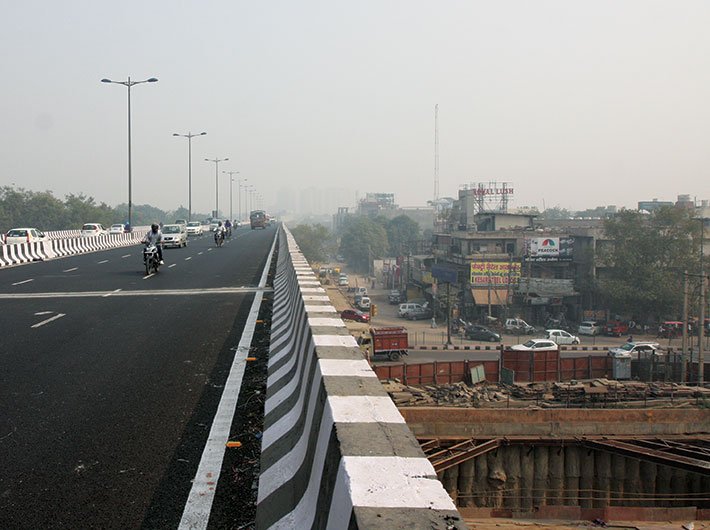


In the coming 20 years, India needs to invest $2.2 trillion (Rs 97.35 lakh crore) on its cities to meet the urban infrastructure demands, the global consultancy firm McKinsey says in its latest report. The study further states that 40 percent of India’s population - an estimated 590 million population is likely to live in the cities by year 2030.

In its report – India’s Urban Awakening, McKinsey migration to the cities by its population is the fastest addition to an urban population of any country in history outside of China. The report also highlights “India will have to build between 700 million and 900 million square metres of residential and commercial space a year.”

India cities will account for nearly 70 percent of India’s GDP as against 58 percent in 2008, the report reveals.

Making aware of how much India needs just in water the report states that for an average citizen water supply could drop from an average 105 litres to barely 65 litres a day, with a large section of the population having no access to portable water at all.

In the transportation, India will have to build modern infrastructure to meet the demand of its population in the next 30 years. The report adds that India needs to build 350 to 400 km of metros and subways every year. It is more than 20 times it has achieved in the past decade.

The report has suggested for implementation of the 74th Constitutional Amendment for devolution of powers to cities to make the delivery of services more efficient.  

Read the report:

Comments


Other News

The Constitution cannot be altered: Justice Abhay Oka

Justice Abhay Oka, who retired from the Supreme Court in May 2025, has said that the Constitution of India cannot be altered. Explaining the landmark Kesavananda Bharati judgment (1973) on the basic structure of the Constitution, he said, “This is one judgment that has saved democracy in India.&rdq

How the flora and fauna evolved in the Indian subcontinent

Mammals of India  By A.J.T. Johnsingh and P.O. Nameer HarperCollins India in association with Bombay Natural History Society  

India`s renewable race is moving beyond megawatts

When Shell bought Sprng Energy in 2022, India`s renewable energy market appeared to offer precisely what global energy majors were seeking: scale, growth and a place in one of the world`s largest energy transitions. Four years later, Shell is selling the same business to Aditya Birla Group for an enterpris

Nepal Floods: India keeps close watch on the situation

India`s central government has been keeping a close watch on the situation arising out of the flash flood in Nepal on Wednesday. Union home minister Amit Shah spoke with the chief ministers of Bihar and Uttar Pradesh, the two states that share the border with Nepal, regarding the disaster

UPI completes 10 years of digital payments revolution

The Unified Payments Interface (UPI), launched on August 25, 2016 by the National Payments Corporation of India (NPCI) under the regulatory oversight of the Reserve Bank of India (RBI), has completed 10 years of transforming digital payments in India. UPI has emerged as the backbone of India’s digi

Here’s an I.D.E.A. for career growth and success

Success in today’s professional organisation is no longer solely determined by academic qualifications, technical expertise or years of experience. While these attributes do matter, organisations increasingly value individuals who demonstrate the right mindset and behavioural qualities. The ability

Upcoming Conferences


-->

Archives

Current Issue

Opinion

Facebook Twitter Google Plus Linkedin Subscribe Newsletter

Twitter






