
MMS calls currency chaos organized loot, Jaitley delivers stinging retort

Former PM urges Modi to come up with pragmatic ways to relieve people’s distress. Jaitley says it is disappointing to hear from people who were in charge when most black money was generated

GN Bureau | November 24, 2016

#Arun Jaitley   #Winter Session   #Parliament   #Rajya Sabha   #black money   #corruption   #economy   #politics   #Manmohan Singh   #Narendra Modi   #Demonetisation  


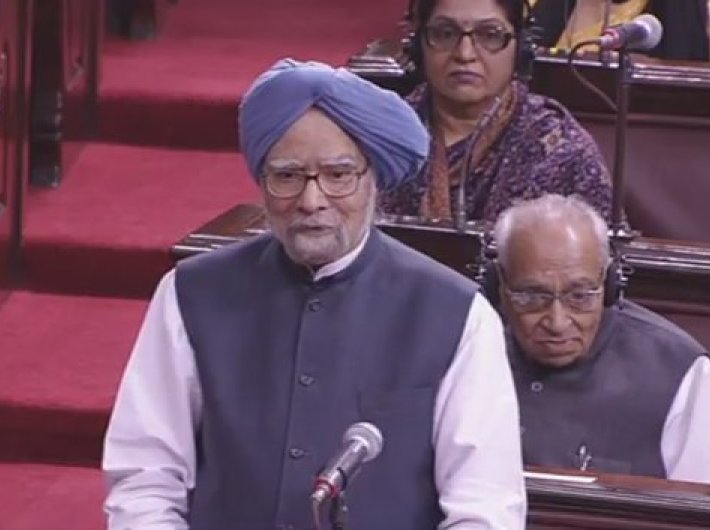
Former prime minister Manmohan Singh and finance minister Arun Jaitley sparred over demonetization in parliament on Thursday. Manmohan spoke of the “monumental management failure” in implementation as well as adverse impact on the economy, while Jaitley countered: “We were not surprised when we heard from those who ran the government between 2004 and 2014 that they didn't like these anti-black money steps. The maximum black money was generated in the country between 2004 and 2014”.

Manmohan Singh – who is, it should be noted here, former RBI governor as well former finance minister – in his short address repeated clarified in his usual mild-manner way that it was not his intention to condemn the move. He, however, in his bullet-point-like intervention, made the following criticisms:

* It has been said that the long-term effects for the economy will be beneficial, but as economist John Maynard Keynes has said, in the long term all of us are dead.

* Sixty to 65 people have lost lives [standing in queues and battling chaos in the aftermath of the currency ban].

* Can the prime minister name any country where people are not allowed to withdraw from their banks their own money?

* In my opinion, this move will hurt small industries and the informal sector. Ninety percent people work in the informal sector. Fifty-five percent people are employed in agriculture. They are hurt.

* GDP can [can] go decline by 2 percent – and this is an underestimate, not overestimate.

* The PM must come up with constructive proposals on how to implement this scheme. I Urge the PM to come up with practical and pragmatic measures to relive the distress suffered by the people.

* Every day new modifications are being announced which do not reflect well on the PM, the finance minister and the RBI.

* Cooperatives banks which have deep presence in rural areas are not allowed to handle [the scheme].

* This is a monumental management failure. It is nothing less than organised loot and legalized plunder.

Finance minister Arun Jaitley retorted, "It is disappointing to hear from people who were in charge of the government when the most black money was generated, most corruption scandals came to the fore.”

 "We were not surprised when we heard from those who ran the government between 2004 and 2014 that they didn't like these anti-black money steps. The maximum black money was generated in the country between 2004 and 2014. Commonwealth Games scandal, the 2G corruption scandal, the coal block scandal all took place during this period."

Jaitley went on to say that the Congress is "manufacturing reasons" to run away from the debate, instead of engaging with the government in a debate over demonetization.

To Manmohan Singh’s assessment that demonetisation will adversely impact the GDP, Jaitley said, "As far as the medium and long term impact on the economy is concerned, including on India's GDP, it is going to be a positive impact. Lot of money that operates in the shadow economy will now be a part of banking structure. The banks will have a lot more to support the economy. The private sector investment which was so far lacking will now be back into the economy."

The finance minister added that the banks which were till now struggling because of the NPA problem would have a lot more money to lend for agriculture, infrastructure, social sector and the possibility of banks lending at lower cost would also rise.

Comments


Other News

Not just politics, let`s discuss policies too

Why public policy matters Most days, India`s loudest debates stop at the ballot box. We can name every major leader and recall every campaign slogan. Still, far fewer of us can explain why a widow`s pension is delayed or how a government school`s budget is actually approved. That

When algorithms decide and children die

The images have not left me, of dead and wounded children being carried in the arms of the medics and relatives to the ambulances and hospitals. On February 28, at the start of Operation Epic Fury, cruise missiles struck the Shajareh Tayyebeh school – officially named a girls’ school, in Minab,

The economics of representation: Why women in power matter

India’s democracy has grown in scale, but not quite in balance. Women today are active participants in elections, influencing outcomes in ways that were not as visible earlier. Yet their presence in legislative institutions continues to lag behind. The Nari Shakti Vandan Adhiniyam was meant to addres

India will be powerful, not aggressive: Bhaiyyaji

India is poised to emerge as a global power but will remain rooted in its civilisational ethos of non-aggression and harmony, former RSS General Secretary Suresh `Bhaiyyaji` Joshi has said.   He was speaking at the launch of “Rashtrabhav,” a book by Ravindra Sathe

AI: Code, Control, Conquer

India today stands at a critical juncture in the area of artificial intelligence. While the country is among the fastest adopters of AI in the world, it remains heavily reliant on technologies developed elsewhere. This paradox, experts warn, cannot persist if India seeks technological sovereignty.

RBI pauses to assess inflation risks, policy transmission

The Reserve Bank of India (RBI) has begun the new fiscal year with a calibrated pause, keeping the repo rate unchanged at 5.25 per cent in its April Monetary Policy Committee (MPC) meeting. The decision, taken unanimously, reflects a shift from aggressive policy action to cautious observation after a signi


Archives

Current Issue

Opinion

Facebook Twitter Google Plus Linkedin Subscribe Newsletter

Twitter






