India is charting a different course of recovery from the rest of the world: Projects GDP growth at 7.8% in 2022-23
The RBI Monetary Policy Committee (MPC) in its bi-monthly policy announcement Thursday kept the repo rate unchanged at 4%. The reverse repo rate is also kept unchanged at 3.35%. The MPC decided to continue “accommodative stance as long as necessary” by a majority of 5-1.
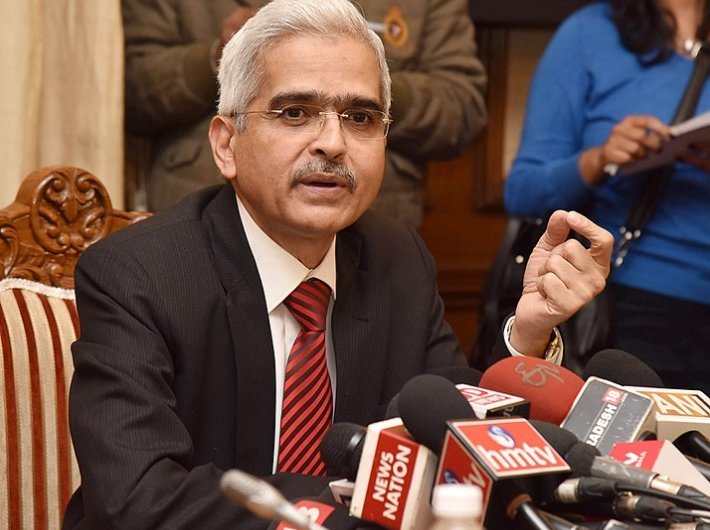
“India is charting a different course of recovery from the rest of the world. It is poised to grow fastest among the major economies as per the projections made by the IMF. Real GDP growth at 9.2% for 2021-22 keeps the GDP at modestly above the GDP levels for 2019-20. Actual GDP growth for 2022-23 is projected at 7.8%,” said RBI governor Shantikanta Das.
He said that the government's thrust on capital expenditure and exports is expected to enhance productive capacity and strengthen the aggregate demand.
In terms of inflation, core inflation remains elevated and headline inflation is expected to peak in Q4. Inflation projection for 2021-22 is retained at 5.3%. CPI inflation for 2022-23 is projected at 4.5% for Q1 - 4.9%, 5.0% for Q2, 4.0% for Q3 and 4.2% for Q4.
While food prices have softened, strong supply-side interventions by the government and increase in domestic production are expected to further ease prices of pulses and edible oil.
As per the RBI, despite the pandemic-induced extreme volatility, India’s financial system has remained resilient and is now in a better position to meet credit demands with economic recovery picking up. In terms of liquidity management, variable rate repo operations of varying tenures will henceforth be conducted as and when warranted. Second, variable rate repos and variable rate reverse repos of 14-day tenures will operate as the main liquidity management tool.
Variable-rate repos and variable rate reverse repos of 14-day tenure will operate as the main liquidity management tool. Based on liquidity conditions these will coincide with CRR maintenance cycle.
Further, starting March 1, fixed rate reverse repo and MSF operations will be available only from 5.30 PM - 11.59 PM on all days instead of from 9.00 AM - 11.59 PM.
High forex reserve buffers and modest current account deficit have provided sustainability to external sector as Indian rupee has shown resilience in forex market in face of global spillovers.
To provide additional sources of capital to domestic debt market including for government securities, RBI announced enhancing the limit for investment under the voluntary retention route scheme from Rs 1.5 lakh crore to Rs 2.5 lakh crore w.e.f April 1.
To reduce segmentation between onshore and offshore markets, to enable more efficient price discovery, and further deepen interest rate derivatives market in India, banks will now be allowed to undertake transactions in offshore foreign currency settled (FCS) overnight index swaps (OIS) with non-residents and other market makers.
Due to continued uncertainty following the third wave of the Covid-19 pandemic, Rs 50,000 crore on Tap Liquidity Facility for Emergency Health Services and Rs 15,000 crore Contact Intensive Sectors announced in May and June 2021 is extended from March 31 till June 30, 2022.
The cap under e-RUPI prepaid single use digital payment voucher issued by centre and states has been increased from Rs 10,000 to Rs 1 lakh per voucher. These vouchers can now be used more than once till amount is completely redeemed to facilitate more efficient delivery of government schemes to beneficiaries.
Mandate limit of transactions in trade receivables discounting system (TReDS) settled through a national automated clearing house (NACH) have been increased from Rs 1 crore at present to Rs 3 crore. This will further enhance the ease of financing the growing liquidity requirements of MSMEs.
To review and address issues relating to financial, operational and reputational risks faced by regulated entities in the wake of IT outsourcing and increasing use of digital channels by customers, the draft directions - Reserve Bank of India (IT Outsourcing) Directions, 2022 and Reserve Bank of India (Information Technology Governance, Risk, Controls and Assurance Practices) Directions, 2022 will be issued for public comments.
The guidelines for credit default swaps (CDS) initially issued in 2013 were reviewed and draft guidelines were issued in February 2021 for public comments. After taking into account feedback received by the public RBI will now issue final CDS directions. These guidelines will facilitate the development of a credit derivatives market and deepen the corporate bond market in India.