
Nikhil J. Alva’s ‘If I Have to be a Soldier’ is a poignant reminder of the human cost of conflict and the enduring impact it leaves on individuals and communities
GN Bureau | February 5, 2024
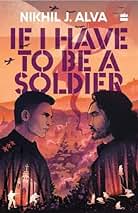
If I Have to be a Soldier
By Nikhil J. Alva
HarperCollins India, 336 pages, Rs 499
 Mizoram. 1966. The Mizo National Front has launched an armed rebellion in its quest for an independent nation, and Delhi is pushing back with all its might. That’s the factual background to this novel ‘If I Have to Be a Soldier’ by Nikhil J. Alva, an award-winning producer, director, and writer.
In this novel, as a brutal war rages, Indian Army Captain Samuel Rego, the son of a Baptist preacher, finds himself returning to the land he ran away from to interrogate one of the most feared MNF commanders in custody. Except, the Mara tribesman everyone knows as ‘Che’ is Sena, Samuel’s childhood friend. When confronted with a grave moral dilemma, the choice Captain Samuel makes causes him and Che to become fugitives. While being hunted across the rugged Mizo Hills, the two men must face events from their bitter past that scarred their friendship, even as they struggle to stay alive and redeem themselves.
Drawing on the dark truths of one of India’s most secretive wars, this novel promises to be a gripping story of identity, survival, betrayal and, above all, love. Relevant and important now, the novel addresses the contemporary significance and urgency surrounding Mizoram's history, a subject matter that has become a focal point of parliamentary discussions.
Alva says, “When I first read about the incredible causality between the once-in-fifty-year flowering of the bamboo in the Mizo Hills, the plague of rats, and the brutal twenty-year long insurgency that followed, as a storyteller, I was hooked! I first wrote a movie screenplay based on the idea. Along the way I fell in love with the characters I had created, and decided that only a novel could do justice to them. It took four years. But I’ve enjoyed every minute of it!”
Son of veteran Congress leader Margaret Alva, the author recalls that his interest in the stories of the people of the Northeast of India developed over numerous visits and journeys he made with her, who was the party’s go-to person for the region in the 1970s and 80s. “It’s from her that I received my first ‘master classes’ in the history and politics of the Northeast. It’s only fitting then, that she was the first person I shared an early draft of this novel with. Her enthusiastic support gave me the confidence to keep labouring on!”
In the acknowledgments at the end of the novel, he writes, “Some of my earliest memories, growing up in New Delhi, are of politicians and leaders from all over the Northeast visiting our home for a meal, a drink or just to say ‘hello’ to my parents, who would always welcome them warmly. Amongst them were former guerrillas who had fascinating stories to tell of their days ‘underground’. I was struck by their joie de vivre, their infectious energy and their wonderful sense of humour. But even as a young boy, I could see that there was a deep sense of sorrow for those they had lost and anger at the injustices and humiliation they had been subjected to. These memories, emotions and experiences have helped shape the characters in this novel.”
Here is an excerpt from the novel, from the opening chapter:
Chapter 1
Eight years is a long time, long enough to turn a boy into a man. Growing up in Asakhua, Sammy had chafed under the yoke of an oppressive Christian moral fabric, where violence was frowned upon and a brave man always ‘turned the other cheek’. The army had freed him of that irksome framework. At first, he was surprised by his capacity for violence. But, in time, he forgot the boy he once was and embraced the man he’d become: Captain Samuel Rego, an Indian Army officer, his uniform absolving him of some of the moral restrictions that society imposed on ordinary men. His excuses: survival, the defence of the motherland, and the destruction of the enemy – in no particular order.
His enemies kept changing though.
1962: The Chinese, who’d gobbled up over 38,000 square kilometres of Indian territory in Aksai Chin and had crushed the Indian Army in the short war that followed in the mountains to the north of where he was now stationed.
1965: The Pakistanis, whom the Indian Army had fought for six long months on the western frontier, forcing the UN to intervene and order a ceasefire.
1966: Guerrillas of the Mizo National Front (MNF), who had overrun vast swathes of the Mizo Hills in India’s northeast.
Indira Gandhi, who had taken over as India’s prime minister in January 1966, was looking for an opportunity to show the rebels in her Congress party, and anyone else who dared challenge her, that she was no pushover. She got that opportunity in March 1966, when the MNF, under the leadership of Indian Army veteran Pu Laldenga, declared the highlands inhabited by the Mizos an independent nation and launched an armed insurrection against the Indian state. The prime minister called in Lieutenant General Sam Manekshaw, who commanded the Indian Army’s Eastern Corps, and gave him a carte blanche to crush the uprising. The general immediately moved the troops of 61 Mountain Brigade, under Brigadier R.Z. Kabraji, to the Mizo Hills.
That’s how it was that a year later, in 1967, Captain Samuel Rego, of 7 Bihar, found himself returning to the land of his birth – a land he despised from the very depths of his soul.
[The excerpts reproduced with the permission of the publishers.]
September 12 marks the International Day for South-South Cooperation, commemorating the 1978 Buenos Aires Plan of Action (BAPA). Forty-eight years later, its central proposition remains relevant: countries of the Global South can draw on their own knowledge, experience and innovations to address shared d
As India prepares to host the 18th BRICS Summit this weekend, and as prime minister Narendra Modi is set to hold a bilateral meet with president Xi Jinping, China’s growing global influence and the changing dynamics of India-China relations will be under focus. But to understand where China is head
This year marks 20 years of BRICS, with India set to host the grouping’s leaders’ summit this weekend. The anniversary offers an opportune moment to assess BRICS’ growing importance at a time when the effectiveness of global governance and the credibility of multilateralism are under in
Triumph of the Indian Republic: My Life, My Struggles By Ram Nath Kovind Rupa Publications, 400 pages, Rs 795 All our presidents so far stand out, each for a different reason. Ram Nath Kovind, the 14th president of India, from 2017 t
Pathbreakers: How 10 Visionary Leaders Transformed India by award-winning journalists By Sucheta Dalal and Debashis Basu Rupa Publications, 304 pages, Rs 695
In a significant gain for citizen protection in the digital economy, the Department of Telecommunications (DoT) has helped prevent suspected cyber fraud losses of more than ₹5,000 crore through its Financial Fraud Risk Indicator (FRI) within fifteen months of its launch on May 22, 2025. This money did











