
A bill that died many deaths

The International Women’s Day is a reminder about scanty presence of women in parliament and legislatures. Yet leaders have shown no urgency to pass the women’s reservation bill.

aasha

Aasha Khosa | March 8, 2017 | New Delhi

#UPA   #Sonia Gandhi   #international women's day   #women's reservation bill   #BJP   #Rajya Sabha   #parliament  


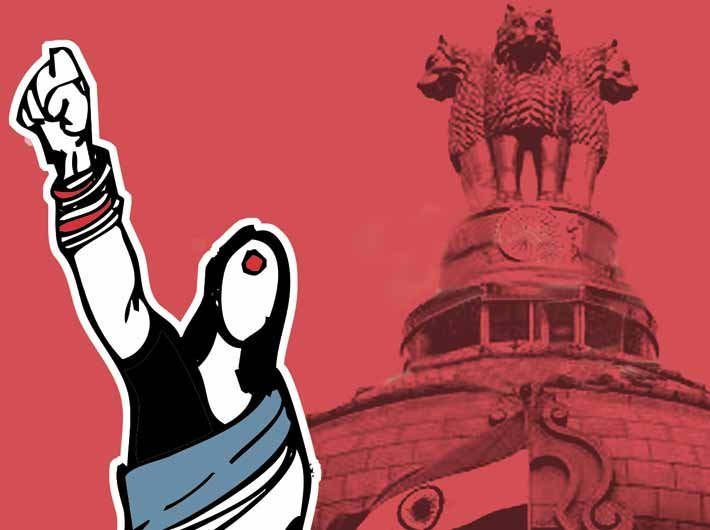
The inherent misogyny and patriarchy in the political class has prevented Indian women from getting a fair share in running the parliament and legislative assemblies in the largest democracy of the world.  These attitudes are best illustrated by the way male-dominated parties have scuttled the Women’s Reservation Bill that envisages 33 percent reservation for women in parliament and legislatures.

While all politicians are busy paying tribute to womenhood on the IWD, let’s have a look at where India stands in women’s participation in lawmaking:
 
India stands on 103rd position in the global list of 140 countries on women’s representation in parliament and state legislatures. While the global average for women in parliament stands at 22.4 percent, India had 12 percent women lawmakers.
 
According to Inter Parliamentary Union (IPU) within Asia, India is at the 13th position out of 18 countries. Countries like South Sudan, Saudi Arabia have better women representation in parliament than India.
 
The fate of the women’s reservation bill:
 
1.       The bill on reserving 33 percent seats for women in parliament and state legislatures are first introduced in by the HD Deve Gowda-led United Front government in the Lok Sabha on September 12, 1996.
 
2.       It was vehemently opposed by leaders of caste-based parties like Lalu Yadav, Ramvilas Paswan and Mulayam Singh Yadav. They argued that the reservation would benefit the already empowered women and not those belonging to disadvantageous castes and communities.
 
3.    Finally, The Constitution (108th Amendment) Bill, 2008, was passed in Rajya Sabha amidst boycott by those opposed to it. It was done at the initiative of UPA chairperson Sonia Gandhi during the UPA’s first term.
 
4.    The bill has since lapsed as the Lok Sabha’s term had come to an end.
 
5.    Though the BJP government had promised to get the bill passed in its election manifesto, it has hardly even spoken about it after coming to power. Recently senior BJP leader M Venkaiah Niadu said the BJP will bring the bill only after it has a majority in the Rajya Sabha.
 

Comments


Other News

AI: Code, Control, Conquer

India today stands at a critical juncture in the area of artificial intelligence. While the country is among the fastest adopters of AI in the world, it remains heavily reliant on technologies developed elsewhere. This paradox, experts warn, cannot persist if India seeks technological sovereignty.

RBI pauses to assess inflation risks, policy transmission

The Reserve Bank of India (RBI) has begun the new fiscal year with a calibrated pause, keeping the repo rate unchanged at 5.25 per cent in its April Monetary Policy Committee (MPC) meeting. The decision, taken unanimously, reflects a shift from aggressive policy action to cautious observation after a signi

New pathways for tourism growth

Traditionally, India’s tourism policy has been based on three main components: the number of visitors, building tourist attractions and providing facilities for tourists. Due to the increase in climate-related issues and environmental destruction that occurred over previous years, policymakers have b

Is the US a superpower anymore?

On April 8, hours after warning that “a whole civilisation will die tonight,” US president Donald Trump, exhibiting his unique style of retreating from high-voltage brinkmanship, announced that he agreed to a two-week ceasefire with Iran. The weekend talks in Islamabad have failed and the futur

Machines communicate, humans connect

There is a moment every event professional knows—the kind that arrives without warning, usually an hour before the curtain rises. Months of meticulous planning are in place. And then comes the call: “We’ll also need a projector. For the slides.”   No email

Why India is entering a ‘stagflation lite’ phase

India’s macroeconomic narrative is quietly shifting—from a rare “Goldilocks” equilibrium of stable growth and contained inflation to a more fragile phase where external shocks are beginning to dominate domestic policy outcomes. The numbers still look reassuring at first glance: GDP


Archives

Current Issue

Opinion

Facebook Twitter Google Plus Linkedin Subscribe Newsletter

Twitter







