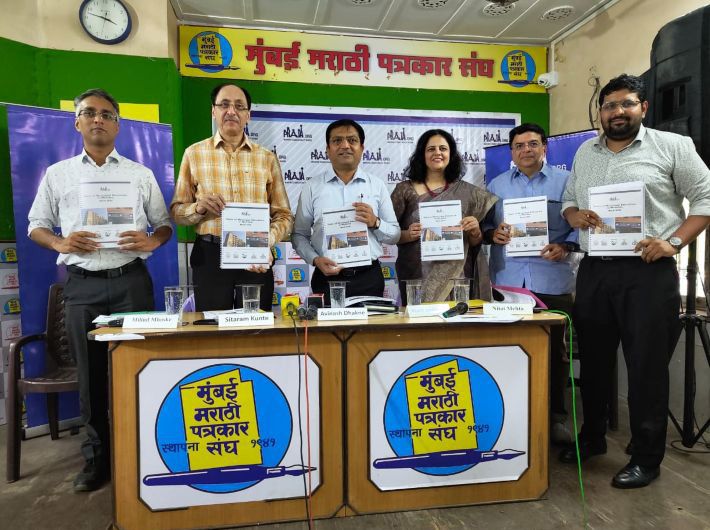
Student enrolment in schools run by the Brihanmumbai Municipal Corporation (BMC) has seen a gradual rise over the past decade, reaching 44% in 2024–25, according to the latest report released by the Praja Foundation. However, the report highlights significant concerns over student retention, language-medium shifts, and the lack of detailed education data systems.
The report, titled State of Municipal Education in Mumbai 2026, analyses trends in enrolment, dropouts, health check-ups, personnel and budgets across BMC schools over the last ten years.
According to the findings, the share of students enrolled in BMC schools rose from 41% in 2015–16 to 44% in 2024–25. Before the pandemic in 2020, municipal schools accounted for 36% of enrolment (2,98,215 students). The number increased during the pandemic period to 42% (3,18,002 students) in 2021–22 before stabilising at 3,10,085 students in 2024–25.
Despite this growth, retention rates remain a major challenge. The report notes that only 48 out of every 100 students who enrolled in Class 1 in 2015–16 continued in the system till Class 10 in 2024–25.
A total of 18% of students (5,638) have an unclear or unrecorded status, indicating the need for improved tracking mechanisms. “Chembur urban resource centre (URC-8) recorded the highest student count at 5,123, followed by Andheri (URC-4) with 3,127 students and Kandivali (URC-2) with 2,991 students."
Another key trend highlighted is the shift in preference towards English-medium education. Over the past decade, enrolment in Marathi-medium schools declined by 34%, while Hindi-medium schools saw a 39% drop. In contrast, English-medium BMC schools recorded a 54% increase in enrolment between 2015–16 and 2024–25.
In BMC schools, the percentage of scholarship holders in 5th standard increased from 1.60% in 2016–17 to 13.17% in 2024–25, while in secondary (8th standard) it increased from 0.60% to 11.52% during the same period
The report also points to data management gaps in the education system. Despite national initiatives such as the Sarva Shiksha Abhiyan, the Right to Education Act, and the National Education Policy, the BMC Education Department still lacks a centralised system for maintaining ward-wise, school-wise, standard-wise or gender-wise education data, the report states.
On the health front, the proportion of students undergoing medical check-ups has improved. In 2016–17, health check-ups were conducted for 69% of enrolled students (2,35,823), which increased to 82% (2,54,251 students) in 2024–25.
Underweight cases have shown a substantial decline, decreasing from 31% in2016–17 to just 4% in 2024– 25.The BMC’s education budget for 2026–27 stands at ₹4,105 crore, out of the civic body’s total budget of ₹80,953 crore, reflecting a significant financial commitment to municipal education.
Asif Khan, manager of Research and Analysis at Praja Foundation, said the increased funding presents an opportunity to improve outcomes.
“With a record education budget and an estimated per-student expenditure of ₹1,32,372 in 2026–27, there is an opportunity to strengthen the education system. The BMC should develop an outcome-based budget to address gaps in the system,” he said.
Avinash Dhakne, additional municipal commissioner of BMC, emphasised the need to invest in teacher development to improve learning outcomes in municipal schools. He said sustained professional development would equip teachers with skills needed for technology-integrated classrooms and modern teaching approaches.
Sitaram Kunte, former chief secretary of Maharashtra and advisor to Praja Foundation, said: “Systemic reform in municipal education is not merely about increasing outlays; it is about re-engineering the governance framework to be outcome oriented. The 2026 report findings indicate that we must move beyond the traditional brick-and-mortar approach to schooling. To arrest declining enrolment and bridge the quality gap, we require a bold structural shift—one that institutionalises digital governance, mandates rigorous service-level benchmarks, and empowers ward-level administration to respond to demographic shifts in real-time. By professionalising teacher capacity building and ensuring budgetary transparency at the school level, we can transform the BMC education system into a model of efficient, transparent, and modern public service delivery. The time has come to treat education as a measurable urban service that is accountable to every citizen”
“Education remains a cornerstone of social and economic progress, and the Brihanmumreforms in municipal education must go beyond increased spending." He called for digital governance, service-level benchmarks and stronger ward-level administrative accountability to address declining enrolment and improve education quality.
Meanwhile, Milind Mhaske, CEO of Praja Foundation, said that education remains a cornerstone of social and economic progress, and the Brihanmumbai Municipal Corporation (BMC), with over 3,10,085 students enrolled in 2024–25, continues to play a vital role in providing accessible public education across Mumbai.
”The trends highlighted in this report underline the need for stronger local governance and policy engagement in the education system. With elected representatives now in place, councillors have a crucial role in strengthening school management committees (SMCs) and preparation of school development plan (SDP) and ensuring that schools receive focused attention at the ward level. Strengthening the local institutional mechanisms will be key to improving the functioning of BMC schools and rebuilding public trust in the municipal education system.”