
Civil society forces Maharashtra govt to scrap Mumbai plan

Development plan for Mumbai growth was at the cost of green zones and heritage structures

GN Bureau | April 21, 2015
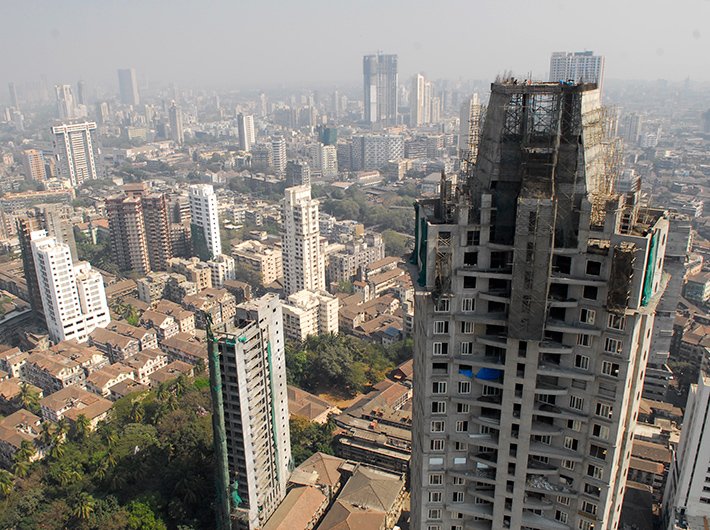


So strong was the civil society protest against Mumbai’s new development plan that the Maharashtra did not wait till Saturday (the last day for filing objections to it), but scrapped it on Tuesday.

The Mumbai Development Plan (DP) 2034 was released on February 16 and it had been strongly opposed by citizens, including politicians and film actors, who normally are reticent about civic affairs.

The cabinet headed by chief minister Devendra Fadnavis took the decision on Tuesday.  The state government had invited feedback on the draft development plan till Saturday. But even before that, Fadnavis announced that it was being scrapped. He has ordered a new plan within four months.

READ: How not to prepare a development plan

The government was inundated with complaints against the DP, especially existing land use (ELU), reservation and floor space index (FSI). The plan for Mumbai called for development at the cost of green zones and heritage structures.

Last week, residents of Mumbai's affluent Pali Hill held a silent protest against the proposal to allow hawkers to set up shop on footpaths.

Film stars Aamir Khan, Salman Khan and Farhan Akhtar were among those who joined Maharashtra Navnirman Sena chief Raj Thackeray in opposing the plan.

In the plan, Aarey Colony with has over 2,000 hectares of green cover, was listed in the plan not as a forest but as a growth centre. Incidentally, on the periphery of the Aarey Colony is Film City, where shooting for films and TV shows is held.

Architects and planners had called the plan "irrelevant" to the needs and aspirations of Mumbai residents. They were against the proposed increase in the FSI, allowing taller buildings.

According to the DP, the allocation for open spaces, education and healthcare service has been reduced significantly while no provision was made for the road network, water pipelines, sewage lines and other basic services.

The increase in bulk FSI was linked to proximity to mass transit modes but not indexed to physical and social infrastructure. Citizens had objected to variable FSI up to 8 while some of them alleged that it would benefit the builders lobby.

Till Monday, the civic officials had received 25,000 suggestions/objections. Compiling the suggestions/objections list is a normal procedure when a DP is made public. A committee shortlists the parties concerned and a hearing is held under the Maharashtra Regional and Town Planning (MRTP) Act. Based the feedback, changes will be made in the final DP before the notification.

Comments


Other News

New pathways for tourism growth

Traditionally, India’s tourism policy has been based on three main components: the number of visitors, building tourist attractions and providing facilities for tourists. Due to the increase in climate-related issues and environmental destruction that occurred over previous years, policymakers have b

Is the US a superpower anymore?

On April 8, hours after warning that “a whole civilisation will die tonight,” US president Donald Trump, exhibiting his unique style of retreating from high-voltage brinkmanship, announced that he agreed to a two-week ceasefire with Iran. The weekend talks in Islamabad have failed and the futur

Machines communicate, humans connect

There is a moment every event professional knows—the kind that arrives without warning, usually an hour before the curtain rises. Months of meticulous planning are in place. And then comes the call: “We’ll also need a projector. For the slides.”   No email

Why India is entering a ‘stagflation lite’ phase

India’s macroeconomic narrative is quietly shifting—from a rare “Goldilocks” equilibrium of stable growth and contained inflation to a more fragile phase where external shocks are beginning to dominate domestic policy outcomes. The numbers still look reassuring at first glance: GDP

Labour law in India: A decade of transition

The story of labour law in India is not just about laws and codes, but also about how the nation has continued to negotiate the position of the workforce within its economic framework. The implementation of the Labour Codes across the country in November 2025 marks a definitive endpoint in the process. Yet

Time for India to build genuine resilience in energy security

There is a strip of water barely 33 kilometres wide between Iran and Oman that connects the Persian Gulf to the rest of the world`s oceans. For most of India`s history, it was a distant geographic fact. Since late February, it has been a kitchen problem.   The Strait of Hormuz. T


Archives

Current Issue

Opinion

Facebook Twitter Google Plus Linkedin Subscribe Newsletter

Twitter







