
India’s growth to rebound as cash shortage eases: IMF

Asian economies are expected to grow by 5.5% in 2017, slightly more than last year

GN Bureau | May 9, 2017

#IMF   #Economy   #Growth   #India   #GDP  
Representational illustration (Ashish Asthana)

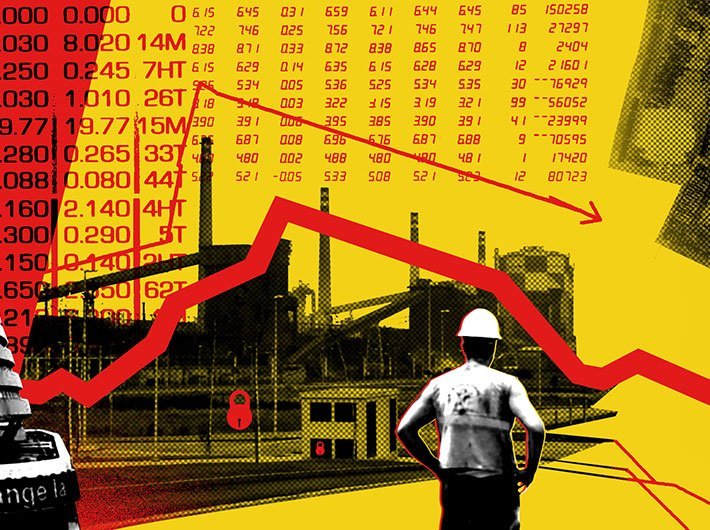
India’s growth is expected to rebound to 7.2 percent in FY 2017-18 as the cash shortages accompanying the currency exchange initiative ease, said an International Monetary Fund report that was released on Tuesday.

The Regional Economic Outlook for Asia and the Pacific estimates growth for the region to increase this year to 5.5 percent from 5.3 percent in 2016. Growth will remain strong at 5.4 percent in 2018, as the region continues to be the leader of global growth.

The report also cites the more favourable global environment with growth accelerating in many major advanced and emerging market economies—notably the US and commodity exporters—as supporting Asia’s positive outlook. Risk appetite remains strong in global financial markets despite some bouts of capital flow volatility in late 2016.

“The signs of growth in the region are encouraging so far. The policy challenge now is to strengthen and sustain this momentum,” said Changyong Rhee, director of the IMF’s Asia and Pacific Department.

The report said that in China, the region’s biggest and the world’s second largest economy, policy stimulus is expected to keep supporting demand. Although still robust with 2017 first quarter growth slightly stronger than expected, growth is projected to decelerate to 6.6 percent in 2017 and 6.2 in 2018.

This slowdown is predicated on a cooling housing market, partly reflecting recent tightening measures, weaker wage and consumption growth, and a stable fiscal deficit.

Japan’s growth forecast for 2017 has been raised to 1.2 percent with support from expansionary fiscal policy and the postponement of the consumption tax hike (from April 2017 to October 2019). The expansion would slow down to 0.6 percent in 2018 as the boost from the fiscal stimulus wears off.

The outlook for other Asian economies is also positive, but with some exceptions. India’s growth is expected to rebound to 7.2 percent in FY 2017-18 as the cash shortages accompanying the currency exchange initiative ease.

In most of the Southeast Asian economies, growth is expected to accelerate somewhat, supported by robust domestic demand—an important driver of growth in these countries. Meanwhile, growth in Korea is projected to remain subdued at 2.7 percent this year despite the recent pick up in exports, mainly owing to weak consumption.

It noted that the region’s outlook, however, is clouded with uncertainty. On the plus side, larger-than-expected fiscal stimulus in the US or stronger business and consumer confidence in advanced economies could provide a further boost to Asia’s exports and growth. Reforms, such as productive public investment in infrastructure in ASEAN and South Asian economies, could help prolong the positive momentum.

Asian economies are especially vulnerable to protectionism because of their trade openness and integration to global value chains. A global shift toward inward-looking policies could suppress Asia’s exports and reduce foreign direct investment to Asia. Furthermore, a bumpier-than-expected transition in China or geopolitical tensions in the region could also weaken near-term growth.

Comments


Other News

PM`s first decisions from Seva Teerth reflect spirit of Seva

In his very first set of decisions after shifting to Seva Teerth, the new address of the PMO, PM Narendra Modi signed important files relating to decisions that reflect the spirit of Seva. These decisions touch every section of society: farmers, women, youth, and vulnerable citizens. 1.

AI@Work: Driving productivity, jobs, and innovation

Key Takeaways     India ranks 3rd in Stanford University`s 2025 Global AI Vibrancy Ranking.     Data infrastructure, entrepreneurship and demography are key enablers for AI adoption.     In India the relative penetration of AI skills was 2.5 ti

Urban Blind Spot: Animals, governance, and the cost of ignoring coexistence

India’s cities are expanding at an unprecedented pace, absorbing people, infrastructure, and economic activity at scale. What urban governance frameworks have been slower to absorb is a reality already playing out on the ground: animals are an inseparable part of urban life. From community dogs and p

How India uses AI in the field of culture and languages

* India is institutionalising AI for culture and languages through national platforms such as BHASHINI, Anuvadini, Gyan Bharatam and Adi Vaani etc. * AI is being used to make cultural and knowledge assets usable by digitisation of manuscripts, translation of academic content, and in

India improves position on Network Readiness Index

India has improved its position by four slots and is now placed at 45th rank in the Network Readiness Index 2025 (NRI 2025) report prepared by Portulans Institute, Washington DC.   The report, released on February 4, maps the network-based readiness landscape of 127 economies based on th

Framework for India-US Interim Agreement announced

India and the United States on Saturday announced they had agreed on an interim framework for an interim trade agreement, indicating a broad roadmap of the opening of the markets and reduction in trade tariffs on both sides. In a message on X, prime minister Narendra Modi said, “Great


Archives

Current Issue

Opinion

Facebook Twitter Google Plus Linkedin Subscribe Newsletter

Twitter






