
SC scraps Jat quota, says community is not backward

UPA-II decision of March 2014 seen politically motivated

GN Bureau | March 17, 2015

#jat quota   #jat reservation   #supreme court   #upa   #other backward classes   #OBC  


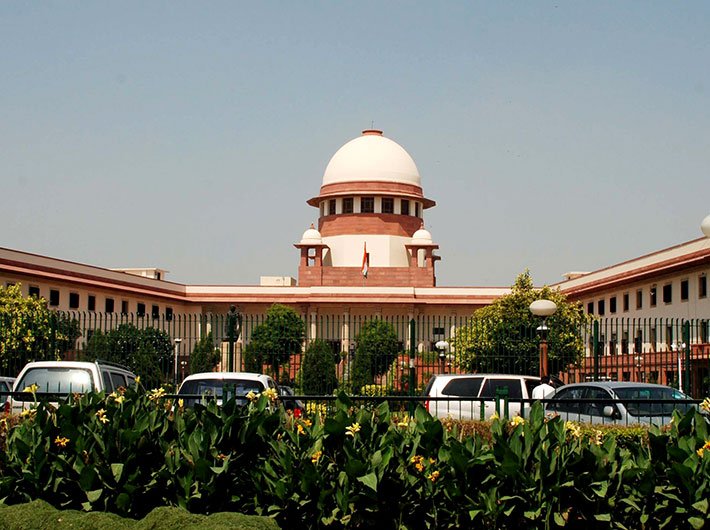
The supreme court on Tuesday cancelled the previous government’s decision to grant reservations to the Jat community under the other backward classes (OBC) category. 

The apex court refused to consider the Jat community as backward and said that caste, though a prominent factor, cannot be the sole factor to determine the backwardness of a person.

“Possible wrong inclusion of a caste in the OBC list may not be the basis of further inclusion… Inclusion of a politically organized community may not be good for other backward classes,” said the bench led by justice Ranjan Gogoi. The court was hearing a batch of petitions some of which were in favour and while some were against the decision.

It may be noted that the UPA government announced reservations to the Jat community under the OBC category in nine states ahead of the general elections in 2014. The government notification included the community in the OBC list in Bihar, Gujarat, Haryana, Himachal Pradesh, Madhya Pradesh, Delhi, Rajasthan (districts of Bharatpur and Dhaulpur), Uttar Pradesh and Uttarakhand, and extended reservation benefits to Jats in job and education.

This decision was challenged by several petitioners who contended that Jats were politically and socially advanced and the decision would further deteriorate the prospects of the deprived groups which actually deserve such benefits.

The move by UPA-II was seen as politically and electorally motivated and it was being speculated that the government wanted to improve its electoral performances in those nine states.

The Narendra Modi government also endorsed this move, terming it in public interest.

In 1997, the national commission for the backward classes (NCBC) rejected the request for inclusion of Jats in the central list of OBCs in nine states. Before the UPA decision, the Jat community was included in the central list of OBCs for the states of Gujarat (Jat Muslims) and Rajasthan (except in Bharatpur and Dhaulpur districts).

Comments


Other News

Dharmendra Pradhan tenders resignation

Dharmendra Pradhan, education minister at the centre of the storm of the NEET paper leak, offered his resignation to the prime minister on Saturday.   He posted a two-page letter on X, saying he was pained by the events of the last ten days. "This is not a matter of personal

Cabinet approves scheme of chemical parks

The union cabinet chaired by the PM has approved Bharat Audyogik Vikas Yojana Rasayan or BHAVYA - Rasayan Scheme for establishing three dedicated Chemical Parks in the country. The Scheme was announced in the Union Budget of FY 2026–27.   The Scheme will have a total financ

Anurag Jain, IAS appointed as Chief Executive Officer, NITI Aayog

 Anurag Jain, a 1989-batch IAS officer of the Madhya Pradesh cadre, has been appointed as the Chief Executive Officer (CEO) of NITI Aayog for a two-year term after serving as the Chief Secretary of Madhya Pradesh. A distinguished administrator with extensive experience in infrastructure, industrial de

Shri Ashok Barnwal, IAS has been appointed as the Chief Secretary of Madhya Pradesh

 Ashok Barnwal, a 1991-batch IAS officer of the Madhya Pradesh cadre, has been appointed as the Chief Secretary of Madhya Pradesh, succeeding Anurag Jain following his appointment as CEO of NITI Aayog. Prior to assuming the state`s top bureaucratic position, Barnwal served as Additional Chief Secretar

PM announces fast-track courts for paper leak cases

Prime minister Narendra Modi on Thursday stated that the government has decided to set up fast-track courts to ensure swift and stringent punishment for those involved in paper leaks. Emphasising that nothing is more important than the welfare and future of the youth, he noted that h

Making India’s textile & apparel sector sustainable

India’s textile and apparel sector sits at the heart of the economy but is constrained by traditional manufacturing approach. It contributes close to 2% of GDP and around 11% of manufacturing gross value added, with GDP share expected to reach 5% by the end of the decade. The sector employs around 45

Upcoming Conferences


Archives

Current Issue

Opinion

Facebook Twitter Google Plus Linkedin Subscribe Newsletter

Twitter







