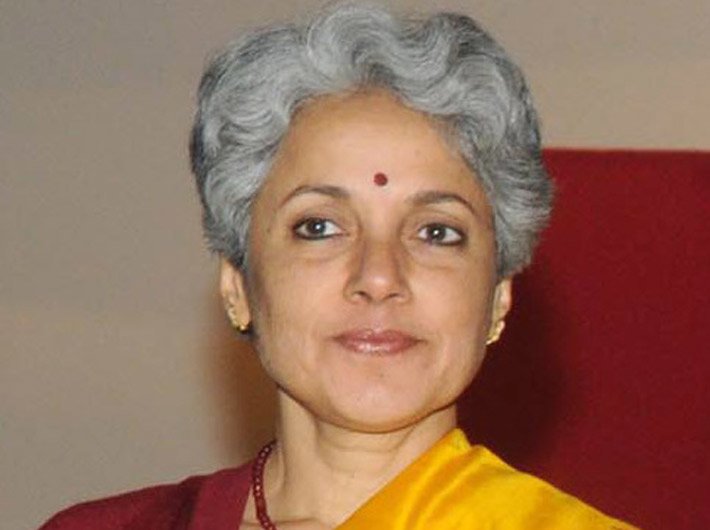
Soumya Swaminathan to head M S Swaminathan Research Foundation

Former WHO chief scientist to use science for sustainable development of rural and coastal communities
geetanjali

Geetanjali Minhas | January 31, 2023


#Soumya Swaminathan   #agriculture   #science   #policy   #WHO   #Covid-19  


Former World Health Organisation (WHO) chief scientist Soumya Swaminathan takes charge as chairperson of M S Swaminathan Research Foundation (MSSRF) from February 1.
 
Founded by her father, the legendary agricultural scientist M S Swaminathan, MSSRF was set up to accelerate the use of modern science and technology for agricultural and rural development and to improve lives and livelihoods of marginalised communities. Over 5,50,000 farm families and 2,50,000 fisherfolk from 4,000 villages across 14 states are benefitted by it every day.
 
“The pandemic has taught us that science and technology can help solve humankind’s problems but need to be used with ethics and equity as the foundation. I look forward to working with the staff of MSSRF and rural, tribal and coastal communities to use science for sustainable development,” Soumya Swaminathan said in a statement.
 
Prior to working as WHO chief scientist, she was the deputy director-general for programmes at that global health body. As the WHO’s inaugural chief scientist, she was instrumental in building its Science Division with a focus on research, quality assurance of norms and standards and digital health. During the Covid-19 pandemic, she played a key role in coordinating scientific efforts at the WHO as well as in setting up Covax with a focus on equitable vaccine distribution to LMICs.
 
Swaminathan was secretary to the Government of India for Health Research and Director General of the Indian Council of Medical Research from 2015 to 2017 where she focused on bringing science and evidence into health policy-making, building research capacity in Indian medical schools  and forging south-south partnerships in health sciences. Between 2009 to 2011 she also served as coordinator of the UNICEF/ UNDP/ World Bank/ WHO Special Programme for Research and Training in Tropical Diseases in Geneva.
 
Swaminathan has published more than 450 peer-reviewed publications and book chapters. She is a Fellow of the US National Academy of Medicine, the Academy of Medical Sciences of the UK and a Fellow of all the science academies in India. She has received several honorary doctorates, including from EPFL, Lausanne and the London School of Tropical Medicine and Hygiene. She serves on several national and global advisory bodies and committees and is an adjunct Professor at Karolinska University in Sweden and Tufts University in Boston, USA.

Comments


Other News

AI: Code, Control, Conquer

India today stands at a critical juncture in the area of artificial intelligence. While the country is among the fastest adopters of AI in the world, it remains heavily reliant on technologies developed elsewhere. This paradox, experts warn, cannot persist if India seeks technological sovereignty.

RBI pauses to assess inflation risks, policy transmission

The Reserve Bank of India (RBI) has begun the new fiscal year with a calibrated pause, keeping the repo rate unchanged at 5.25 per cent in its April Monetary Policy Committee (MPC) meeting. The decision, taken unanimously, reflects a shift from aggressive policy action to cautious observation after a signi

New pathways for tourism growth

Traditionally, India’s tourism policy has been based on three main components: the number of visitors, building tourist attractions and providing facilities for tourists. Due to the increase in climate-related issues and environmental destruction that occurred over previous years, policymakers have b

Is the US a superpower anymore?

On April 8, hours after warning that “a whole civilisation will die tonight,” US president Donald Trump, exhibiting his unique style of retreating from high-voltage brinkmanship, announced that he agreed to a two-week ceasefire with Iran. The weekend talks in Islamabad have failed and the futur

Machines communicate, humans connect

There is a moment every event professional knows—the kind that arrives without warning, usually an hour before the curtain rises. Months of meticulous planning are in place. And then comes the call: “We’ll also need a projector. For the slides.”   No email

Why India is entering a ‘stagflation lite’ phase

India’s macroeconomic narrative is quietly shifting—from a rare “Goldilocks” equilibrium of stable growth and contained inflation to a more fragile phase where external shocks are beginning to dominate domestic policy outcomes. The numbers still look reassuring at first glance: GDP


Archives

Current Issue

Opinion

Facebook Twitter Google Plus Linkedin Subscribe Newsletter

Twitter