Cyber safety and data privacy can harness technology use, according to Traveller Tribes 2033
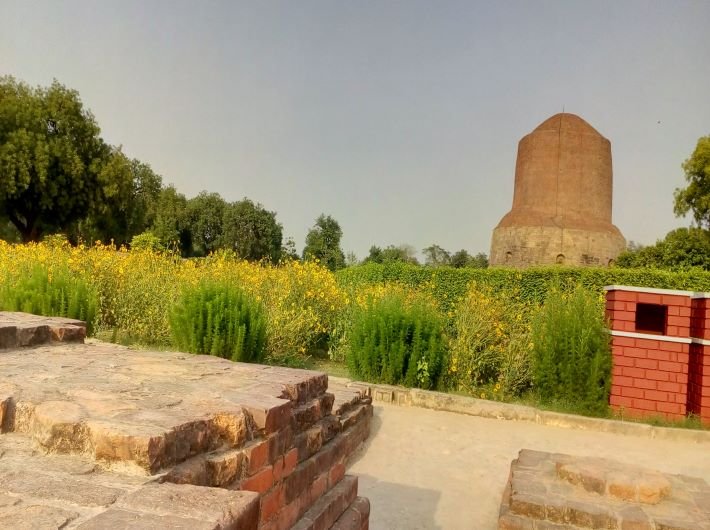
Sarnath, near Varanasi, where the Buddha delivered his first sermon: a leading tourist attraction in India. (Photo: Ashish Mehta)
An increasing number of people will prefer to rely on emerging and new technologies and travel in more sustainable ways, according to a global research study, Traveller Tribes 2033, has revealed.
The global survey is third in a series launched in 2007 and identifies four Traveller Tribes that will develop in the next 10 years. The study finds that while travellers are now opting for technology, they are also concerned about increasing need for cyber security and data privacy due to proliferation of technology. It says the industry must work together to ensure all travellers benefit from technological advances.
The report commissioned by travel technology company Amadeus and administered by global research firm Northstar Research Partners says that an estimated 474 million tourists travelled internationally between January and July 2022 as compared to 175 million in 2021 and international tourism continues to bounce back.
Its India findings are based on an online survey conducted by Northstar Research Partners in August 2022 with 752 Indian travellers who are likely to travel internationally in the next three years and have travelled internationally at least once in the last year.
As many as 43% respondents were concerned about frequent cyber security attacks in 2033. Some 42% felt that travel in 2033 will be unaffordable, 34% were concerned about data safety of shared data and an equal percentage felt that going on trips with large carbon footprint will be viewed negatively and 32% felt that travel will continue to negatively impact environment.
The psychographic approach of study has identified four key likely dominant Traveller Tribes in 2033:
32% Indian respondents identified themselves as Excited Experientialists, a group that has a ‘try it and see’ approach to life and travel. 44% are without children and have a mid- to high-income job with flexible working options that which enables them to readily explore the world. This segment has a ‘you only live once’ (YOLO) approach. They are more likely than other travellers to act on instinct making them 2033s ‘anti-planners’ favouring less predictable and more exciting accommodation experiences. They are also open to technology that helps them ‘speed up’ certain aspects of their journey with many expecting to use artificial intelligence (AI) in the airport environment, finds the survey.
As many as 9% respondents identified themselves as Memory Makers, a group that takes simplified approach to travel and wants to make memories and visit places. 44% are aged 42 and above and habitual in their travel behaviours. Future can be a daunting prospect for them and they have people first attitude and place less value on technology and sustainability. Despite their scepticism about technology they are excited about virtual reality and augmented reality preview with majority expected to use VR tours before purchasing a trip.
Nineteen percent of those surveyed identified themselves as Travel Tech-Fluencers, a group that includes today’s young business travellers with a forward-looking perspective on life. As many as 48% of the respondents in this group are under the age of 32 and their perspective is symbolized by how much technology they own. Many want to travel sustainably but appear conscious about sustainability options around their method of travel rather than where they’ll be staying.
40% respondents identified themselves as Pioneer Pathfinders who live a fast-paced life and are looking for their next adventure. 82% in this group are between 23 and 41 age group. They like to plan but are open to new experiences. This group is more willing than others to let sustainability influence their decisions. This group will be very comfortable using all forms of alternative payment methods in 2033 whether via cryptocurrency or within a VR environment.
Further, the survey finds that 37% travellers are excited about Artificial Intelligence making trip planning quicker in 2033 and an equal percent about technology that could reduce problems during trips. 36% are excited about travelling in more environmental friendly ways, 35% about different ways of payment for making more affordable trips and 35% wanting to sample trips in virtual reality before deciding where to go.