Demonetisation, a completely self-inflicted wound, caused approximately 2% loss in India's GDP, said the Congress leader
For the first time in our history, India has the opportunity to wipe out poverty. If India is able to lift another 350 million people out of poverty by 2030, it would be an achievement that the human race can be proud of, Congress leader Rahul Gandhi said and added: “Doing this would require us to grow by more than over 8 percent in the next 13 years.”
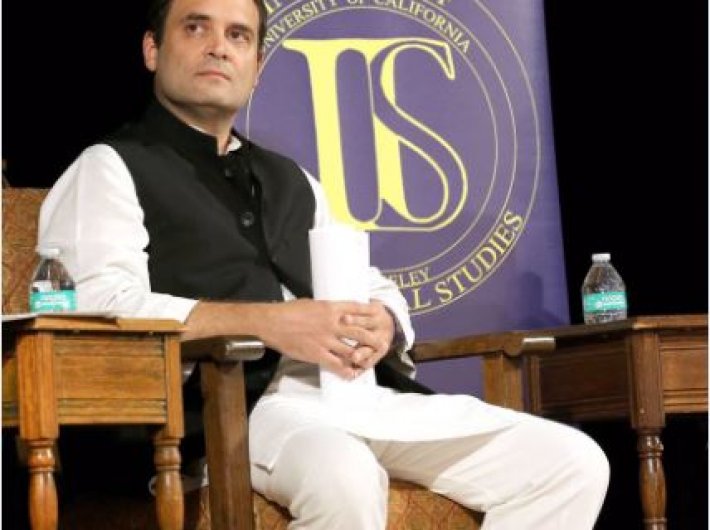
“India has done it before and can do it again. But it is imperative that India sustain a high growth rate for an uninterrupted period of 10-15 years in order to do so. At the heart of this powerful engine which India has built with its blood, sweat and bare hands since 1947 are jobs and economic growth. No amount of growth is enough for India if it's not accompanied by the creation of jobs. It doesn't matter how fast you grow. If you are not creating jobs, you are not actually solving the problem,” Gandhi said in his speech at the University of California, Berkeley.
“So, the central challenge of India is jobs. Roughly 12 million young people, 12 million, enter the Indian job market every year. Nearly 90% of them have a high school education or less. India is a democratic country and unlike China, it has to create jobs in a democratic environment. India does not have and nor does it want China's coercive instruments. We cannot follow their model if massive factories are controlled by fear. Jobs in India are going to come instead from small and medium scale industries. India needs to turn a colossal number of small and medium businesses into international companies,” he added.
He pointed out that currently, all the attention in India is paid to the top 100 companies. “Everything is geared towards them. Banking systems are monopolised by them, the doors of government are always open to them and laws are shaped by them. Meanwhile, entrepreneurs running small and medium businesses struggle to get bank loans. They have no protection and no support. Yet these small and medium businesses are the bedrock of India and the world's innovation.”
He went on to say that the strength so far has been that we have done all this peacefully. “What can destroy our momentum is the opposite energy. Hatred anger and violence and the politics of polarisation which has raised its ugly head in India today. Violence and hatred distract people from the task at hand. Liberal journalists being shot, people being lynched because they are Dalits, Muslims killed on suspicion of eating beef, this is new in India and damages India very badly. The politics of hate divides and polarises India making millions of people feel that they have no future in their own country. In today's connected world, this is extremely dangerous. It isolates people and makes them vulnerable to radical ideas,” he said.
“…listening to India is very important. She will give you all the answers that you seek. India's institutions have over 70 years have built a profound understanding of our country. We have experts in every single field. Ignoring India's tremendous institutional knowledge and taking ad hoc decisions is reckless and dangerous. Decisions like Demonetisation which removed 86% of cash from circulation overnight and was carried out unilaterally without asking the Chief Economic Advisor, the Cabinet or even Parliament imposes a devastating cost in India,” he added.
The Congress leader said that currently, “we are not producing enough jobs. 30,000 new youngsters are joining the job market every single day and yet the government is only creating 500 jobs a day. And this doesn't include the massive pool of already unemployed youngsters. The decline in economic growth today is worrying and it's leading to an upsurge of anger in the country”.
“The government's economic policies, demonetisation and hastily applied GST have caused tremendous damage. Millions of small businesses were simply wiped out as a result of demonetisation. Farmers and manual labourers who use cash were hit extremely hard. Agriculture is in deep distress and farmer suicides have sky rocketed across the country. Demonetisation, a completely self-inflicted wound caused approximately 2%loss in India's GDP. India cannot afford to grow and create jobs at the current rate. If we continue at the current rate, if India cannot give the millions of people entering the job market employment, anger will increase and it has the potential to derail what is being built so far. That will be catastrophic for India and the world beyond it.”