
Unless SC stays it, Aadhaar law will prevail: Ravi Shankar Prasad

If a parliament enacts a law and unless the court stays the operation of the law, this law will hold the field, says minister

GN Bureau | April 10, 2017

#Aadhaar   #Ravi Shankar Prasad   #parliament   #law   #supreme court  


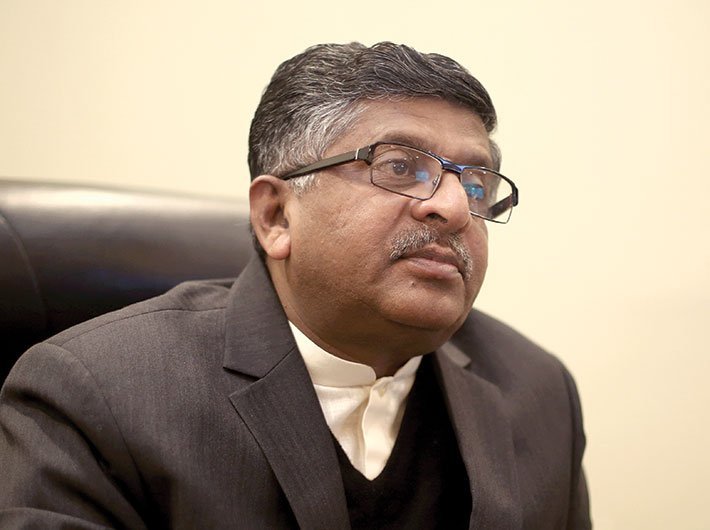
 Law and IT minister Ravi Shankar Prasad on Monday said that the interim orders of the supreme court on Aadhaar delivered in 2015 are meant for an "interim arrangement" and "it is not a judgement". 

Responding to the questions in the Rajya Sabha, the minister said: "Some of our congress friends want to paint Aadhaar as the biggest tragedy of the country, and I disagree with them.” 
 
He said that when the SC gave orders -- and the dates are August 11, 2015 and October 15, 2015 –“pervading a set of subsidies to be given directly, there was no Aadhaar law then. At that point in time the biggest argument in time in the court was that there is no statutory backing and you were taking biometrics of crore of people. And yes Jairam Ramesh you were wrong then. By executive order you can’t take so many biometrics. We needed a statutory enactment.” 
 
He added that the second argument was privacy. “Because there is no executive order, there was no mechanism available. Now Sir, day in and day out I am asked a question in both houses why are you exceeding the judiciary….We are law making body. We are a sovereign body. We govern the country. We should seek accountability. Here is a case where parliament has done a robust law Aadhaar and it is completely robust. Legally speaking the law is well settled. That the parliament can remove the lacunae which the court points out. 
 
The minister went on to say that the Aadhaar Act carried forward the whole architecture, “how whole biometric shall be done under what conditions, under what accountability. And whole architecture is available, it’s not the ecosystem, Jairam Ramesh”. 
 
“If that is there, there is a law, there is no stay from the SC and we are being governed by the mandate of an Aadhaar Act, 2016, passed by the parliament. I stand by the sovereignty of the parliament for law making. Now whole of Aadhaar ecosystem is governed by law. 
 
“And my understanding of law is very clear. That an interim order is only for the purpose of interim arrangement, till the parliament steps in. It is not a judgement. It has been referred to nine bench or seven bench. May be this law also be reconsidered. But I am clear that if a parliament enacts a law and unless the court stays the operation of the law, this law will hold the field.”
 

Comments


Other News

What the US–Iran peace deal means for India

After months of rising tensions, the United States and Iran have reached a memorandum of understanding called the "Islamabad Agreement." This agreement allows for the immediate reopening of the Strait of Hormuz without tolls and provides Iran with relief from sanctions, depending on its complianc

V. M. Tarkunde: A legal luminary par excellence

14 Lawyers: Portraits from The Bar By Raju Ramachandran  Juggernaut, 248 pages, Rs. 799  

The Cost of Obesity

The latest episode of Checks and Balances focuses on the ticking time bomb of obesity in India, and Geetanjali Minhas of Governance Now spoke with a panel of experts. You can watch the episode here: https://youtu.be/mH

US-Iran deal: Path to peace or prelude to deeper regional quagmire?

In the midst of deep mistrust, the US and Iran are reported to have reached a framework deal for ending the West Asian conflict. But whether it will result in any meaningful breakthrough or pave the way for any lasting peace in the region, is in the realm of speculation.   During

Lived life, philosophy, spirituality and other enigmas

The Ashes Are Warm: Memories of a Lifetime Spent with UG Krishnamurti By Mahesh Bhatt and Sunita Pant Bansal Rupa Publications, 384 pages, Rs 495  

In Varanasi, fringe expansion vs. core heritage

For centuries, the urban framework of Varanasi was defined not just by its relationship with the sacred Ganga but by its multifaceted network of urban commons. Historic kunds, seasonal talabs (ponds), and open maidans served as the city’s basic ecological infrastructure. Th


Archives

Current Issue

Opinion

Facebook Twitter Google Plus Linkedin Subscribe Newsletter

Twitter






