
The failure of RTE, plight of transgenders, and why farmers are unhappy

Here are a list of stories from our magazine and website that you must read this weekend

GN Bureau | June 10, 2017

#sociocracy   #farmers protest   #weekend stories   #right to education  


Just as farmers in Madhya Pradesh, Maharashtra and elsewhere were gathering for violent protests to press their demands, the chief economic advisor to the government of India, Arvind Subramanian, delivered a lecture on agricultural economy which helps put the matters in perspective. Here are some relevant excerpts from Subramanian’s lecture at the National Academy of Agricultural Sciences on June 5, titled ‘Transforming Indian Agriculture: By Loving Some Agriculture Less and the Rest More’ 
 
 
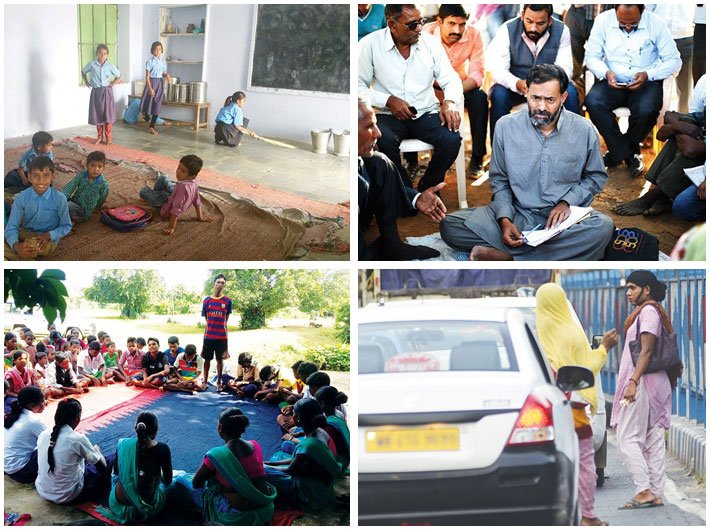
Swaraj Party convenor, Yogendra Yadav, explains the ecological, economic and existential crisis behind farmers’ unrest.
 
 
The West Bengal government had announced the formation of a Transgender Development Board in March 2015, with an aim to look into the needs of the transgender and hijra community that is deprived of education, employment, healthcare facilities and survives mainly by begging on the streets and trains. But has it helped?


Kutumbashree, a Kerala government initiative, is an example for empowerment of women and the vulnerable. Sociocracy has been used in large, medium and small organisations successfully owing to its ability to focus on addressing individual needs to participate in decision-making and improving team dynamics. Akin to sociocracy is social development coaching, in which coaches look at individual needs and link this with group needs and to those aspects of the group that will enhance cooperation and harmony.
 
 
In April 2010, the central government brought a law guaranteeing the children access to free and compulsory primary education. Based on a simple idea of universalising education, the law brought with it a lot of hope. While the enrolment has certainly gone up over the years, many schools lack basic facilities. And education or learning still remains a distant dream for most of the children. The law also mandated that no child be held back in class until they complete the elementary education (that is, up to class 8). Though the students get promoted to the next class, they do not learn what they should in a given class.


Comments


Other News

Not just politics, let`s discuss policies too

Why public policy matters Most days, India`s loudest debates stop at the ballot box. We can name every major leader and recall every campaign slogan. Still, far fewer of us can explain why a widow`s pension is delayed or how a government school`s budget is actually approved. That

When algorithms decide and children die

The images have not left me, of dead and wounded children being carried in the arms of the medics and relatives to the ambulances and hospitals. On February 28, at the start of Operation Epic Fury, cruise missiles struck the Shajareh Tayyebeh school – officially named a girls’ school, in Minab,

The economics of representation: Why women in power matter

India’s democracy has grown in scale, but not quite in balance. Women today are active participants in elections, influencing outcomes in ways that were not as visible earlier. Yet their presence in legislative institutions continues to lag behind. The Nari Shakti Vandan Adhiniyam was meant to addres

India will be powerful, not aggressive: Bhaiyyaji

India is poised to emerge as a global power but will remain rooted in its civilisational ethos of non-aggression and harmony, former RSS General Secretary Suresh `Bhaiyyaji` Joshi has said.   He was speaking at the launch of “Rashtrabhav,” a book by Ravindra Sathe

AI: Code, Control, Conquer

India today stands at a critical juncture in the area of artificial intelligence. While the country is among the fastest adopters of AI in the world, it remains heavily reliant on technologies developed elsewhere. This paradox, experts warn, cannot persist if India seeks technological sovereignty.

RBI pauses to assess inflation risks, policy transmission

The Reserve Bank of India (RBI) has begun the new fiscal year with a calibrated pause, keeping the repo rate unchanged at 5.25 per cent in its April Monetary Policy Committee (MPC) meeting. The decision, taken unanimously, reflects a shift from aggressive policy action to cautious observation after a signi


Archives

Current Issue

Opinion

Facebook Twitter Google Plus Linkedin Subscribe Newsletter

Twitter






