In the thick of battle with the deadly coronavirus, India on March announced a 21-day lockdown till April 14 in its bid to control the spread of virus which has so far led to 10 people’s death and over 600 others falling sick across the country. As per experts, India, which is in the second stage of Covid-19, may see an exponential spike in death and positive cases if the virus takes epidemic shape in the third or fourth stage as has been seen in Italy, Spain and the US. To fight the contagion, the country has girded up its loins. Prime minister Narendra Modi, in his address to the nation on March 24, announced a Rs 15,000 crore corpus to develop health care facilities and infrastructure. This was followed by similar announcements from the finance minister and the central bank governor.
However, what has made India earn praise from across the world is its initiative to reach out to the countries which are deep in humanitarian crisis. It has shipped medical equipment and other necessary gadgets to Iran which has turned out to be a major coronavirus hit country after China in Asia. On February 26, it sent 15 tonnes of medical kits to China, the epicentre of the deadly contagion.
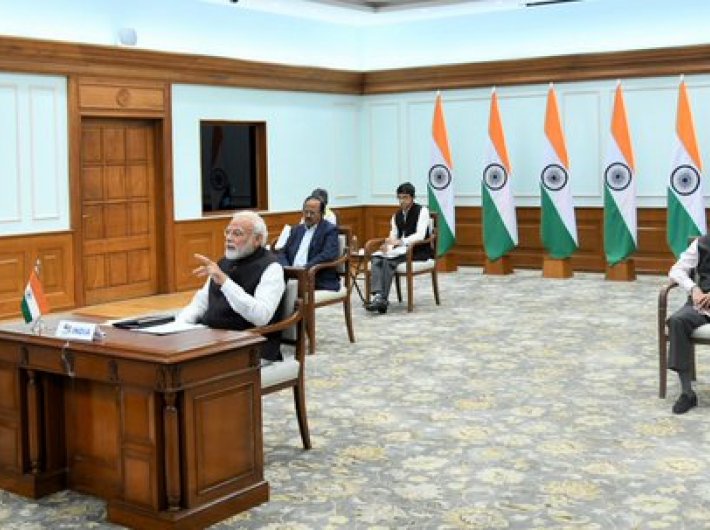
But the smartest move came for the display when under the initiative of Modi, a SAARC video conference, attended by all member countries, was organized to prepare the region to fight the epidemic. It was seen as an out-of-box initiative where in India pledged $10 million towards a Covid-19 emergency fund. India had also pledged, during the video conference, to put together a rapid response team of doctors and specialists for SAARC to handle coronavirus cases. Except for Pakistan which had directed minister of state for health Zafar Mirza to represent the country at the video conference, every country was represented by either head of government or head of state. Also Pakistan was the only country which didn’t show any interest to fight the epidemic in collaboration with neighbouring South Asian countries.
This was clear when in the spirit of collaboration every SAARC nation pitched in with money to create $18.3 million worth of fund, Pakistan, which looks at it as an India-led initiative, was the lone South Asian country that didn’t contribute anything to it. Despite this, the move has helped India in winning over trust of its neighbours, it has also silenced those who said New Delhi’s lost its international stature and clout in the aftermath of the violence and death over citizenship law.
Similarly on March 20, foreign secretary Harsh Vardhan Shringla participated in a telephonic conference initiated by US deputy secretary of state Stephen Biegun to discuss measures being taken to fight Coronavirus in the Indo-Pacific region. Representatives from South Korea, Vietnam, Japan, Australia and New Zealand also participated in the conference. India is about to join more such international video conferences at the leadership, official and expert levels to explore ways and means to deal with the epidemic, indicating New Delhi’s recognition in the global scheme of things. All this at the time when China is being pilloried by US president Donald Trump and other international leaders for hiding the truth about the virus when it had hit Wuhan in late December after a cluster of patients were found to be carrying it. China is blamed for downplaying the severity of the virus with strict clampdown on information about it, including its ability to rapidly transmit from person to person and the circumstances in which Dr Li Wenliang, a whistleblower, died. On the other hand, India is showered with accolades and compliments for taking quick measures against the spread of virus. The World Health Organisation has praised India for its “enormous and very impressive” move to contain the virus. “The commitment from Indian govt, the Prime Minister’s Office has been enormous, very impressive. It is one of the reasons why India is still doing quite well. I am very impressed that everyone has been mobilized,” Henk Benkedam, WHO representative to India said in his tweet.
Saudi Arabia, the Chair of the G-20 grouping, described India as an “important asset” for the international and regional fight against Coronavirus. “Saudi Arabia views India as an important strategic partner. India is an important asset to international and regional integrated efforts to deal with the current situation and minimize its impact on the health of global community,” India-based Saudi ambassador Saud bin Mohammad Al Sati recently said in an interview with a news agency. Earlier US defence secretary Mark Esper in a telephonic conversion with his Indian counterpart Rajnath Singh appreciated India’s leadership in coordinating Covid-19 related relief efforts in the South Asian region.
Meanwhile, Jim O’Neill, the former Goldman Sachs chief economist, doesn’t think India itself would be able to give a quality response to the virus attack. “Thank God this didn’t start in somewhere like India, because there’s absolutely no way that the quality of Indian governance could move to react in the way that Chinese have done, that’s the good side of the Chinese model, and I think you could probably say the same about Brazil too,” O’ Neill said taking a jibe against India.
But then such pejorative comments stand in sharp difference from the ground reality as India, despite reporting first positive Coronavirus case on January 30, has in nearly 8 weeks reported over 600 cases of Covid-19, while most advanced countries like Italy with quality medical facilities could see the virus taking epidemic shape in the fifth week since January 31 when they reported first positive case of the contagious virus.
Overall, the moral of the story is: India is not only trying best to give good fight to the deadly virus, it is also leading the international community in believing that people’s life is more important than economy.