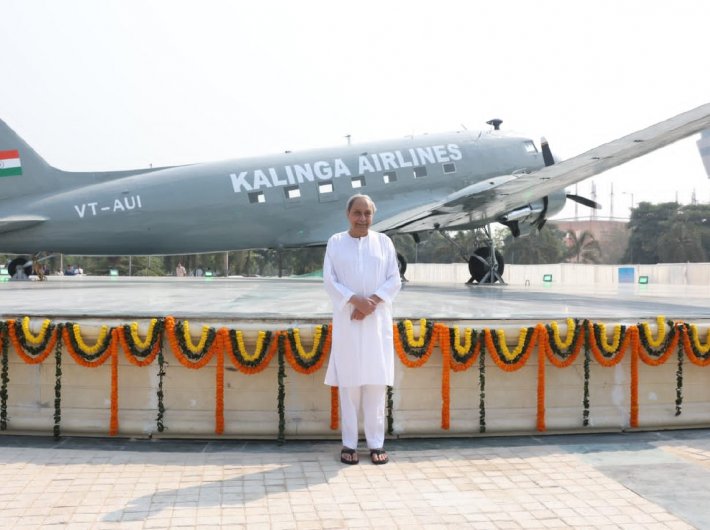
Pilot, industrialist, politician in power or in opposition, he always charmed masses
One morning, in 1996, former IAS officer Vivek Pattanayak and his wife were pleasantly surprised when former Odisha chief minister Biju Patnaik greeted them in the lobby of Odisha Bhawan in New Delhi. At that time Biju was a Lok Sabha MP.
As usual, after enquiring about his well being, the legendary leader invited the couple for lunch that day. However, due to prior commitments, they couldn’t accept the invitation. “I still regret it, little did I know that it’s going to be our last meeting,” rues the 1966 Odisha cadre officer. A year later, in 1997, Biju Patnaik, arguably the tallest leader of Odisha, breathed his last.
“I have heard about Pandit Nehru and seen leaders of different generations and parties, from Indira Gandhi to Vajpayee and Advani. I have worked under so many chief ministers of Odisha. Biju Patnaik was simply unique,” adds the ex-bureaucrat, who gave shape to the power reforms under Biju Patnaik.
An ardent fan of India’s first prime minister and a staunch believer of Nehruvian philosophy, aviator and industrialist Biju Patnaik, grew as a leader in the midst of stalwarts. However, while others banked on the support of their respective political parties, Biju was a brand by himself. (His 107th birth anniversary was commemorated on Sunday.)
A researcher and trained pilot, Anil Dhir, who first met him at the Bhubaneswar flying club, continues to cherish his one-year association with Biju, the adventurous pilot. “Daredevil, visionary and extremely large-hearted, he was the hero for all us at the flying club,” puts Dhir, who has written a book on the leader.
“He was very much a political animal throughout his life. However, he was a people’s leader,” adds Dhir. For the most part of his political career, barring the less than a decade which includes his two stints as chief minister of roughly seven years and union steel minister in the Morarji Desai cabinet, Biju was in the opposition. In 1971, he had even lost one Lok Sabha and five assembly seats simultaneously. However, throughout his political career, he remained the state’s tallest figure. “There was a mutual romance between Biju Patnaik and the people regardless of his electoral loss or victory,” says Aurobindo Behera, who was secretary to Biju during his second stint as CM.
As far as electoral politics goes, his younger son and Odisha’s incumbent CM, Naveen has had much more success than him. Following Biju’s death, a reluctant Naveen, who hardly knew the state or its language back then, headed a new regional outfit named after his father – Biju Janata Dal.
Since its maiden tryst in 2000, the BJD has gone on to win five successive polls and Naveen is the longest serving CM of Odisha. However, some believe that despite his immense popularity, Naveen is yet to attain Biju’s significance.
Many say that the Biju factor has helped Naveen immensely. “Naveen is the biggest beneficiary of the Biju legacy,” says senior journalist Bighneswar Sahu.
Incidentally, though Odisha has no dearth of leaders who happen to be sons of chief ministers and whose father or mother ruled for at least for two years, none could make it big like Naveen. Take the cases of Tathagata Satpathy whose mother Nandini Satpathy was a close aide of Indira Gandhi or Harekrushna Mahtab’s son Bhartruhari Mahtab. Besides, owning media houses, both have been Lok Sabha MPs multiple times on BJD tickets. While in 2019, Tathagata, a four time MP, decided not to contest polls, Bhartruhari is into his firth term. Others like, late Bijayshree Routray (son of Nilamani Routray) and senior BJP leader KV Singhdeo (son of RN Singhdeo) became ministers.
Even twenty five years after Biju’s death, many swear by his name.
One of them is Rasananda Lenka, a 92-year-old, senior advocate at the Rairangpur sub-divisional court under Odisha’s Mayurbhanj district. By his own admission, a “pucca Congress worker,” Lenka recalls that a couple of years before becoming a councilor of the Rairangpur NAC in 1962, he had been appointed as organising secretary of the state Youth Congress, which provided him an opportunity to meet Biju.
Refreshing his memory, he says a ten-member delegation of Youth Congress from across the country was going to attend a conference in Belgrade in 1962. Though Lenka was eager to be part of the delegation, he didn’t see any hope. He, however, took a chance, reached Bhubaneswar and expressed his desire to Biju Patnaik, who had been elected as the chief minister then.
“Then and there, Biju-babu dialed the landline. On the other side was Mrs Indira Gandhi. Biju Babu said, ‘Indira, note down this name, he is my candidate from Odisha.’ When Mrs Gandhi replied that the delegates had already been finalised, Biju-babu, thundered, ‘add one and make it eleven or drop one from the list, but make sure that Lenka is a part of the delegation’,” narrates the nonagenarian.
Biju then asked if he had plans to visit some other place after the conference. Lenka said he intended to spend a few days at someone’s place in London. He also shared his itinerary. A few days later, Lenka flew to Belgrade. After the conference, the delegates moved to London but due to lack of foreign exchange, others returned home. Lenka didn’t. Because the day he reached London, a stranger came calling him, and handed him 500 dollars for his expenses. Before leaving, the gentleman of Indian origin politely said, “Biju Babu has instructed me to give you the money.”
That assistance made it possible for Lenka to visit Switzerland, France, Italy and Germany. “No one’s like Biju Babu. He cared for everyone across party lines and had a heart for every Odia,” says Lenka.
Not only admires like Lenka, but even his opponents and staunch critics admired Biju.
“The 1961 election sent me to the assembly, it made Biju-babu the chief minister. Though he had a magnetic personality, we were never on the same page, we had ideological differences,” recalls ex MLA Padmacharan Nayak, 96.
He says he used to criticise Biju and his government. “Those days were different. Communication was not easy and meeting each other not so frequent, but he was keeping tabs about everyone,” reminisces Nayak
One day they met, exchanged greetings. Suddenly, looking at Nayak, Biju said, “You have been speaking a lot of nonsense about me. I will squeeze you like a mosquito.” “I maintained silence. Because we knew he only spoke upfront, never held any grudge. He would speak to you harshly and the very next moment, he extended all support. Biju-babu was different,” says Nayak.